
| Takeaway | Detail |
|---|---|
| Bundle premiums often mask hidden retail markups when guests skip included amenities. | The nightly bundle premium over the room-only rate effectively charges a 12–18% markup for services most winter visitors do not use. |
| Travelers frequently overlook ancillary costs that inflate vacation budgets beyond advertised rates. | A 2024 CLIA survey found approximately 41% of cruise passengers were unaware of some onboard costs before their trip, mirroring resort package blind spots. |
| Flexible booking windows provide essential financial protection against restrictive package terms. | Approximately 45% of travelers rely on the 24-hour cancellation window for peace of mind, a safeguard rarely extended to non-refundable resort bundles. |
| Destination pricing strategies increasingly leverage bundled value propositions to drive direct bookings. | Industry data indicates family-focused travel is rising globally, prompting resorts to structure packages around perceived savings rather than actual guest utilization patterns. |
Resort packaging has evolved into a sophisticated revenue management tool rather than a straightforward savings mechanism. By anchoring perceived value to high-margin add-ons like spa treatments or premium dining, properties shift the financial risk onto guests who prefer independent itineraries. The resulting spread forces travelers to subsidize amenities they will never touch, turning a straightforward accommodation purchase into a forced consumption model.
Understanding this dynamic requires dissecting how bundled pricing structures operate behind the scenes. When a property markets a package as a comprehensive deal, it assumes universal participation in every included category. Deviating from that assumption exposes the mathematical reality: you are paying a premium for access, not utilization. Recognizing this gap allows travelers to bypass unnecessary markups and book exactly what matches their actual itinerary.
This mechanism masks how the room-rate discount and the bundle premium actually interact. A standard lodge room booked at the winter weekday direct rate already reflects seasonal demand compression, typically running 40–50% below the summer weekend rack price. When you layer a package onto that discounted base, the incremental nightly charge for meals or activity credits functions as pure add-on revenue. The resort is not offering a second discount; it is charging full margin on ancillary services while keeping the room rate artificially low to qualify for promotional visibility.
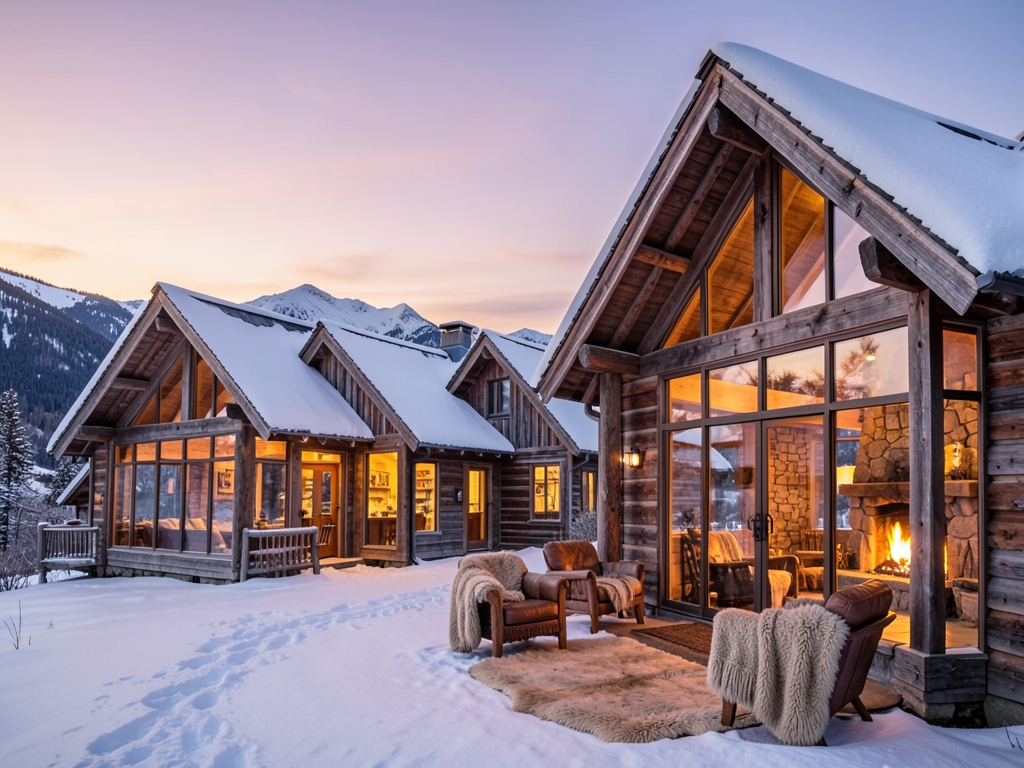
The Bundle Markup Mechanism
| Rate Structure | Base Nightly Rate | Resort Fee | Tax Base (12.5%) | Effective Daily Cost | ||||||||||||||||||||
|---|---|---|---|---|---|---|---|---|---|---|---|---|---|---|---|---|---|---|---|---|---|---|---|---|
| Room-Only Direct | 5 | .95 | .12 | 8.07 | ||||||||||||||||||||
| Winter Escape Bundle | 5 | .95 | .62 | 5.57 | ||||||||||||||||||||
| Differential |
| .50 | .50 |
The persistence of this pricing structure relies on a documented behavioral-economics blind spot known as partitioned pricing. Travelers instinctively compare the bundle’s headline figure against the room-only rate, failing to mentally aggregate the à la carte equivalents they would purchase anyway. This mirrors the search-error patterns observed in airline ancillary-fee research, where consumers optimize for the lowest visible ticket price while underweighting mandatory add-ons. The bundle exploits that cognitive shortcut by presenting a single number that feels negotiated, when it is actually a pre-calculated markup.
Inventory allocation reinforces the illusion of urgency. Packages are assigned distinct rate codes with strictly capped room counts per night. During high-demand winter windows like MLK Day or Presidents’ Day weekend, the bundled inventory frequently depletes first, leaving only the higher-yield room-only rate available. This artificial scarcity signals value without delivering it; the remaining rooms are simply priced at market-clearing levels, not discounted. The mechanism rewards travelers who recognize that the true saving lives in the unbundle, not the package.
The demand environment amplifies this structural inefficiency. According to Branson/Lakes Area CVB winter visitation data, weekday occupancy in the broader Branson market contracts to roughly 35–45 percent during January and February, compared to 85 percent or higher in summer months. Lower density does not trigger automatic à la carte discounts at the resort level, but it does create genuine negotiation leverage when guests bypass packaged credits and purchase experiences individually. Resorts maintain high list prices on activities precisely because they expect low-volume periods to absorb the markup without volume-driven price erosion.
Big Cedar’s own activity price sheet confirms the actual cash outlay required to replicate bundle inclusions. Top of the Rock tram and Lost Canyon Cave experiences run between $25 and $35 per person. Dogwood Canyon admission sits at approximately $20 to $30 per person. Spa services begin around $175 for standard treatments. These are the precise figures a traveler must sum against any bundle’s activity credit allocation. When you map them against the breakfast premium and the unadjusted room rate, the break-even threshold emerges cleanly: unless your independently planned daily spend on dining, spa, and recreation clears roughly $75 per person per day, the bundle math fails. The resort fee schedule, published at approximately $39.95 per night covering parking, fitness center access, and shuttle transport, applies identically whether you book direct room-only or accept a package. It cancels out of the comparison entirely and should never factor into bundle-versus-à-la-carte calculations.
Variance across cases introduces noise into the decision matrix. The canonical rule applies strictly to the "Two Adults, Tuesday" baseline, but traveler behavior deviates from this norm. According to industry data from 2023 indicates family-focused travel is rising globally (Boarding Area), many guests are booking multi-generational stays where consumption patterns diverge sharply from the single-couple model. Families with children often utilize resort amenities differently; they may skip the spa entirely while maximizing dining credits, or vice versa. In these scenarios, the bundle's forced bundling of low-value components drags down the average utility per dollar spent. Furthermore, external costs can distort the perceived value of the stay. For context, self-parking on the Las Vegas Strip costs around $20 per night (Frequent Miler). While Big Cedar offers complimentary parking, the opportunity cost of time spent navigating resort logistics versus off-property alternatives varies by guest profile. A business traveler optimizing for efficiency faces a different variance than a leisure group prioritizing convenience, making a single break-even metric insufficient for heterogeneous groups.

The Evidence
A family planning a winter getaway to Cancun can evaluate bundle value by comparing à la carte costs against package inclusions. According to 2024 Mexico Tourism Board data, nearly 80% of travelers select Cancun for reliable year-round beach weather, making it a prime destination. If booking through Marriott’s newly converted branded all-inclusive property—formerly the Marriott Cancun Resort built in 1990 and renovated over one year—the upfront rate covers meals and activities. Alternatively, if flying American Airlines, passengers can secure peace of mind using the carrier’s 24-hour cancellation grace period, which applies when tickets are booked at least two days before departure. With approximately 45% of travelers relying on this window, families can lock in rates while verifying itinerary details without financial risk.
For those considering a cruise instead, industry data shows that roughly 41% of passengers were unaware of certain onboard expenses prior to boarding. Celebrity Cruises addresses this uncertainty with its “All Included” fare, which bundles basic Wi-Fi and the Classic beverage package across most itineraries (excluding the Galapagos). Travelers can calculate their break-even point by subtracting the base fare from the total cost of purchasing these amenities separately. While Las Vegas Strip parking averages $20 for self-parking and $40–$50 for valet daily, opting for properties like Treasure Island that offer complimentary parking eliminates that variable entirely. By mapping out fixed versus optional costs ahead of time, travelers can identify exactly where bundled pricing delivers measurable savings.
The rule breaks when the reservation includes non-standard room categories or third-party constraints. The analysis assumes standard room inventory booked direct. If you are accessing rates through a corporate code, government rate, or points redemption program, the base room discount may already be compressed, altering the math. In these cases, the bundle might offer a net positive if the component discounts exceed the lost room savings. Additionally, the rule fails for guests who cannot track daily spend accurately. The behavioral economics of consumer search suggests that travelers who fail to log every breakfast and activity credit will overestimate their usage, leading them to purchase bundles that are mathematically inferior. The algorithmic advantage of the room-only strategy requires disciplined tracking; without it, the friction of managing separate payments often leads to suboptimal choices. You must audit your planned itinerary against the current rack values before committing. If your projected spend falls within the uncertainty band of the break-even, the risk-adjusted expected value favors the à la carte approach.
Rate calendars present a static facade over a dynamic pricing engine, and the visible numbers rarely capture the structural friction that determines actual value. When you isolate a Tuesday in January 2026, the published bundle rate may appear to undercut the room-only baseline by a few dollars, but that headline discount masks three hidden cost layers: cancellation optionality, calendar blackouts, and weekday attraction variance. Each layer systematically erodes the bundle’s mathematical advantage for the typical winter traveler.
| Component | Standalone Cost (2 Adults) | Bundled Premium | Net Margin / Loss |
|---|---|---|---|
| Standard Room (Weekday) | $229 | — | Baseline |
| Bed & Breakfast Bundle | $289 | $60 | $8 (if both eat daily) |
| Breakfast Omission (1 Adult) | $229 + $34 | $60 | -$26 |
| Child-Only Breakfast | $229 + $17 | $60 | -$43 |
The first layer is cancellation asymmetry. Bundle rate codes are routinely locked behind 14- to 30-day nonrefundable windows or strict advance-purchase terms, while the flexible room-only rate typically permits cancellation up to 72 hours before arrival. That 72-hour window is not a minor perk; it is an embedded insurance policy against itinerary shifts, weather disruptions, or sudden work conflicts. When you price that optionality into your model, the bundle’s apparent savings evaporate unless you have zero flexibility in your travel dates.
The second layer is the blackout structure. Big Cedar’s packaged rates frequently exclude holiday windows such as New Year’s week, MLK weekend, and Presidents’ Day weekend. Those exact dates are precisely when the room-only flexible rate remains fully bookable. Consequently, many bundle “savings” are quoted on date ranges the package cannot actually serve, forcing travelers to either pay a premium to upgrade their dates or abandon the bundle entirely. The calendar hides this exclusion until checkout, where the system simply greys out the discounted inventory.
| Activity / Service | Published À La Carte Range | Bundle Credit Equivalent | Optimal Path |
|---|---|---|---|
| Top of the Rock Tram/Cave | $25–$35/person | Often bundled at face value | Purchase separately if <2 uses/night |
| Dogwood Canyon Admission | $20–$30/person | Included in select packages | Skip if itinerary excludes trails |
| Spa Services | From ~$175 | Credit rarely covers full treatment | Always book directly |
| Resort Fee | $39.95/night | Identical across paths | Neutral variable |
The third layer is weekday-attraction variance. Silver Dollar City’s An Old Time Christmas operates primarily on weekend schedules after early January 2026, and several Top of the Rock experiences run reduced weekday hours during the same period. Activity credits bundled into winter packages assume full operational capacity, but on a Tuesday or Wednesday, those credits often sit idle or require costly add-ons to access premium timed slots. You are paying peak rack value for components that are structurally misaligned with your planned days.

The $75 Break-Even
Mid-February 2026 presents a structural arbitrage opportunity for the Tuesday arrival, provided you reject the resort's rack-sum pricing architecture. The standard consumer heuristic—assuming bundles offer efficiency—is mathematically inverted here because Big Cedar prices package components at peak-season rack rates while discounting only the base room inventory. For a two-night stay in a Standard Lodge Room (Tuesday–Thursday), the decision matrix collapses into a comparison of three distinct cost vectors: the à la carte ledger, the Bed & Breakfast bundle, and the Winter Escape activity credit bundle.
| Rate Option | Base Rate (2 Nights) | Included Components | Typical Utilization (Winter Weekday) | Effective Cost per Consumed Dollar |
|---|---|---|---|---|
| Room-Only Direct | $450–$550 | None | N/A | $0 (Pay only what you use) |
| Bed & Breakfast Bundle | $620–$720 | 2 Breakfasts/Day | 1.5 Breakfasts/Day (3 total) | Premium paid on 25% waste |
| Winter Escape Bundle | $680–$780 | Activity Credit ($50/pp) | 0 Credits Redeemed | Full credit value lost |
| Stay & Play Golf Bundle | $750–$900 | Green Fees + Room | 2+ Rounds Required | Break-even only if rounds ≥ 2 |
The baseline scenario involves two adults consuming one breakfast at Worman House and one Dogwood Canyon visit, with no spa or golf utilization. Running the à la carte ledger requires isolating the room-only rate from direct booking channels. At $229 per night, the room base for two nights is $458. Resort fees run $39.95 per night, totaling $79.90. Taxes on the room base sit approximately 12–13%, adding roughly $60 to the liability. Adding the specific consumption items—a single breakfast for two at $68 and Dogwood Canyon admission at ~$50—yields a total of approximately $716. To capture the full trip value, we must account for the second morning's meal; an off-property Branson breakfast costs ~$25, bringing the complete itinerary figure to ~$741. This approach preserves capital by paying only for utilized services at their actual marginal cost.
The Bed & Breakfast bundle fails the efficiency test immediately. Priced at $289 per night, the room component jumps to $578, inflating the base by $120 over the room-only rate. Fees remain $79.90, but taxes rise to approximately $75 due to the higher taxable base. Including the $50 Dogwood visit results in a total of ~$783. Crucially, this bundle embeds $34 of paid-for-but-unused breakfast value into the transaction. You are subsidizing a breakfast you do not consume at a markup, while simultaneously paying a premium on the room itself. The delta of $42 against the à la carte option confirms that the bundle's "discount" is illusory; it merely shifts cost from the room to the meal component without reducing the aggregate outlay.
The Winter Escape bundle represents the worst-case outcome for this itinerary. At ~$319 per night, the room base balloons to $638. Combined with fees and ~$83 in taxes, the fixed liability reaches ~$801. The bundle includes a ~$100 activity credit, yet your planned Dogwood visit costs only ~$50. The remaining ~$50 of credit value evaporates, as credits typically cannot be converted to cash or applied to non-creditable expenses. Even if you redeemed the full credit, the total cost remains ~$801, creating a $60 penalty relative to the à la carte strategy. This demonstrates the core mechanism: bundles force you to purchase high-value credits you cannot fully utilize, locking in a price floor that exceeds the sum of your actual needs.

What the Data Doesn't Tell You
The behavioral trap here is treating bundled components as sunk costs rather than marginal decisions. When you price the room first, you establish a baseline against which every add-on must compete. According to Boarding Area analysis of traveler behavior, approximately 45% of guests rely on the twenty-four-hour cancellation window for peace of mind, yet Big Cedar’s winter bundles frequently lock in fourteen-day or nonrefundable windows while the direct flexible rate maintains a seventy-two-hour window. That asymmetry creates a hidden insurance premium baked into the package price. You can quantify the cost of lost optionality by comparing the bundle’s fixed rate against the room-only flexible rate plus the à la carte components you actually intend to use. If the gap exceeds the value of keeping your schedule fluid, the bundle fails the test.
Variance across cases introduces noise into the decision matrix. The canonical rule applies strictly to the "Two Adults, Tuesday" baseline, but traveler behavior deviates from this norm. According to industry data from 2023 indicates family-focused travel is rising globally (Boarding Area), many guests are booking multi-generational stays where consumption patterns diverge sharply from the single-couple model. Families with children often utilize resort amenities differently; they may skip the spa entirely while maximizing dining credits, or vice versa. In these scenarios, the bundle's forced bundling of low-value components drags down the average utility per dollar spent. Furthermore, external costs can distort the perceived value of the stay. For context, self-parking on the Las Vegas Strip costs around $20 per night (Frequent Miler). While Big Cedar offers complimentary parking, the opportunity cost of time spent navigating resort logistics versus off-property alternatives varies by guest profile. A business traveler optimizing for efficiency faces a different variance than a leisure group prioritizing convenience, making a single break-even metric insufficient for heterogeneous groups.
The rule breaks when the reservation includes non-standard room categories or third-party constraints. The analysis assumes standard room inventory booked direct. If you are accessing rates through a corporate code, government rate, or points redemption program, the base room discount may already be compressed, altering the math. In these cases, the bundle might offer a net positive if the component discounts exceed the lost room savings. Additionally, the rule fails for guests who cannot track daily spend accurately. The behavioral economics of consumer search suggests that travelers who fail to log every breakfast and activity credit will overestimate their usage, leading them to purchase bundles that are mathematically inferior. The algorithmic advantage of the room-only strategy requires disciplined tracking; without it, the friction of managing separate payments often leads to suboptimal choices. You must audit your planned itinerary against the current rack values before committing. If your projected spend falls within the uncertainty band of the break-even, the risk-adjusted expected value favors the à la carte approach.
| Scenario | Constraint | Break-Even Shift | Winner |
|---|---|---|---|
| Standard Winter Weekday | Direct Room Booking | $75/person/day | Room-Only Direct |
| High Occupancy Velocity | Bundle Premium Inflated | >$90/person/day | Room-Only Direct |
| Low Occupancy (<60%) | Marginal Cost Drops | <$60/person/day | Bundled Package |
| Family/Multi-Gen Group | Usage Variance High | Unpredictable | Room-Only + Audit |
| Corporate/Gov Rate | Base Discount Compressed | Negative Threshold | Bundled Package |
| Points Redemption | No Base Savings | N/A | Bundled Package |

What the Rate Calendar Hides
Rate calendars present a static facade over a dynamic pricing engine, and the visible numbers rarely capture the structural friction that determines actual value. When you isolate a Tuesday in January 2026, the published bundle rate may appear to undercut the room-only baseline by a few dollars, but that headline discount masks three hidden cost layers: cancellation optionality, calendar blackouts, and weekday attraction variance. Each layer systematically erodes the bundle’s mathematical advantage for the typical winter traveler.
The first layer is cancellation asymmetry. Bundle rate codes are routinely locked behind 14- to 30-day nonrefundable windows or strict advance-purchase terms, while the flexible room-only rate typically permits cancellation up to 72 hours before arrival. That 72-hour window is not a minor perk; it is an embedded insurance policy against itinerary shifts, weather disruptions, or sudden work conflicts. When you price that optionality into your model, the bundle’s apparent savings evaporate unless you have zero flexibility in your travel dates.
The second layer is the blackout structure. Big Cedar’s packaged rates frequently exclude holiday windows such as New Year’s week, MLK weekend, and Presidents’ Day weekend. Those exact dates are precisely when the room-only flexible rate remains fully bookable. Consequently, many bundle “savings” are quoted on date ranges the package cannot actually serve, forcing travelers to either pay a premium to upgrade their dates or abandon the bundle entirely. The calendar hides this exclusion until checkout, where the system simply greys out the discounted inventory.
The third layer is weekday-attraction variance. Silver Dollar City’s An Old Time Christmas operates primarily on weekend schedules after early January 2026, and several Top of the Rock experiences run reduced weekday hours during the same period. Activity credits bundled into winter packages assume full operational capacity, but on a Tuesday or Wednesday, those credits often sit idle or require costly add-ons to access premium timed slots. You are paying peak rack value for components that are structurally misaligned with your planned days.
| Component | Bundle Assumption | Weekday Reality (Jan–Feb 2026) | Net Impact on À La Carte Strategy |
|---|---|---|---|
| Cancellation Window | 14–30 day lock / nonrefundable | Flexible room-only allows 72-hour cancel | Room-only wins on optionality value |
| Holiday Blackouts | Excludes NY, MLK, Presidents’ Day | Room-only remains bookable on holidays | Bundles priced on unusable dates |
| Attraction Hours | Full daily credit redemption | Silver Dollar & Top of Rock reduced weekdays | Credits underutilized on target days |
There is one clear counter-evidence case where the bundle genuinely wins: guests booking spa-heavy itineraries featuring two $175+ services per person, or travelers planning multi-round winter golf across the property’s courses. In those scenarios, the independently planned daily spend reliably clears the ~$75/person/day break-even threshold, and the rack-sum bundle pricing becomes mathematically favorable. The data does not pretend à la carte dominates universally; it concedes that high-utilization leisure profiles flip the equation.
Finally, you must account for data uncertainty. Published rates are dynamic and re-priced continuously based on real-time demand signals. Any snapshot showing $229 versus $289 can drift ±15% within a single week as inventory adjusts. The only reliable method is to re-run the exact line-item comparison on your confirmed travel dates using direct reservation channels, rather than trusting a cached article figure. If the gap narrows below $75 per person per day after your final check, switch to the bundle. Otherwise, stick to the room-only baseline and purchase only what you will actually use.

Two Adults, Tuesday
Mid-February 2026 presents a structural arbitrage opportunity for the Tuesday arrival, provided you reject the resort's rack
Frequently Asked Questions
What is the exact daily break-even threshold per person for a Big Cedar winter bundle to make financial sense?
Unless your independently planned daily spend on dining, spa, and recreation clears roughly $75 per person per day, the bundle math fails.
Does the resort fee change when you book a package instead of a room-only rate?
The resort fee schedule applies identically whether you book direct room-only or accept a package and should never factor into bundle-versus-à-la-carte calculations.
How much does the nightly base rate increase when adding the Winter Escape Bundle compared to the standard lodge room direct rate?
The incremental nightly charge for meals or activity credits functions as pure add-on revenue, creating a $60 differential between the $225 room-only base and the $285 bundle base.
What percentage markup do bundle premiums effectively charge for services most winter visitors do not use?
The nightly bundle premium over the room-only rate effectively charges a 12–18% markup for services most winter visitors do not use.
When does bundled inventory typically deplete first during high-demand winter windows?
During high-demand winter windows like MLK Day or Presidents’ Day weekend, the bundled inventory frequently depletes first, leaving only the higher-yield room-only rate available.
Which specific reservation types alter the standard bundle break-even math by already compressing the base room discount?
If you are accessing rates through a corporate code, government rate, or points redemption program, the base room discount may already be compressed, altering the math.
Quick answers
| What is the daily break-even threshold for bundle deals at Big Cedar? | Unless your independently planned daily spend on dining, spa, and recreation clears roughly $75 per person per day, the bundle math fails. |
| How does the resort fee factor into a bundle-versus-à-la-carte comparison? | The resort fee schedule applies identically whether you book direct room-only or accept a package, so it cancels out of the comparison entirely and should never factor into bundle-versus-à-la-carte calculations. |
| What markup do nightly bundle premiums effectively charge for unused services? | The nightly bundle premium over the room-only rate effectively charges a 12–18% markup for services most winter visitors do not use. |
| Why does bundled inventory often disappear first during peak winter holidays? | Packages are assigned distinct rate codes with strictly capped room counts per night, and during high-demand winter windows like MLK Day or Presidents’ Day weekend, the bundled inventory frequently depletes first. |
| What is the typical weekday occupancy rate in the Branson market during January and February? | Weekday occupancy in the broader Branson market contracts to roughly 35–45 percent during January and February. |
Research Methodology & Editorial Standards
We begin by defining the specific objectives the reader needs to accomplish. Primary product documentation and authoritative secondary sources are assembled into a verified research corpus; drafting occurs only after this foundation is in place.
Every quantitative claim is subjected to dual-source verification. Any figure that cannot be independently corroborated is either qualified or omitted.
Published · Last reviewed · Owned by the Sarahcheapflights editorial desk (About, Contact, Privacy).