
| Takeaway | Detail |
|---|---|
| Strip resort fees run $35–$55 a night — and they're taxed like room rate | The fee posts outside the quoted rate but is charged as part of the room's taxable amount, so the all-in cost of the $35–$55 band always exceeds the band itself. |
| Flat fees punish exactly the midweek deals travelers search for | The fee is fixed while the base rate is dynamic: a 4.15% markdown on a $39 Tuesday base is rounding error beside an unmoved $45 fee, so the deeper the discount, the larger the fee's share of the bill. |
| The value ranking has inverted — fee-free now beats fee-stacked on ordinary midweeks | Once the stack lands, the fee-free locals-casino Tuesday transacts at roughly 70% of the mega-resort's all-in price, about 70 cents on the Strip dollar, flipping the ranking the headline rate implies. |
| Rank rooms on itemized folios, never blended quotes | Separate the line items — base rate, facility fee, tax — rather than trusting one merged number; sized against an $89 base, a mid-band $45 fee is 50% of the room rate before tax, exactly the gap a blended quote buries. |
The mechanics are partitioned pricing. Strip resorts bolt a flat fee — $35–$55 a night before tax — onto a base rate that dynamic pricing cuts every midweek, and the fee never flinches. Against an $89 base, a $45 fee is 50% of the room rate; against a $39 Tuesday steal, it more than doubles the sticker. The Strip's headline advantage evaporates exactly on the deals travelers search for, which is why the 2025–26 push toward all-in pricing matters: it drags the real number onto the first screen.
The countermove is unglamorous: price the folio, not the teaser. Itemize every line — base rate, facility fee, tax — the way you'd audit any provider's fee schedule, then let the all-in figure rank the field. On ordinary midweeks, that ranking now sends value off the Strip, where the no-fee room quietly wins the Tuesday.
This is why fee pain concentrates exactly where metasearch shoppers hunt. Rate-sorted search surfaces the cheapest headlines, and the Strip's cheapest headlines are midweek — precisely the nights the flat fee does maximum damage. The standard travel-scam warning that excluded fees can add 50% or more to your up-front cost actually undersells the midweek Strip case, where the sticker covers barely 44% of the true total. Kill the reflex that "Strip rooms are overpriced": on midweek inventory the sticker isn't the price — it isn't even half of it.

The Drip-Pricing Machine
The fee is also where a decade of Vegas lodging inflation actually lived. Archived hotel fee schedules show average Las Vegas resort fees at roughly $18 a night in 2016, reaching $45-plus at the MGM and Caesars flagships by 2024 — the upper half of the Strip's $35–$55 fee band — compound growth near 9% annually that outran Strip room-rate growth over the same span. The room got pricier; the fee got pricier faster, widening the advertised-versus-charged gap every year.
| Measure (per night) | Midweek, $39 base | Saturday, $189 base |
|---|---|---|
| All-in nightly cost | $89.63 | $239.63 |
| Fee stack as share of all-in cost | 56% | 21% |
| Advertised sticker as share of true cost | 44% | 79% |
| True cost as multiple of sticker | 2.3x | 1.3x |
The regulatory floor has now moved under all of it. The FTC's junk-fee rule, finalized in December 2024 and enforceable from mid-2025, requires lodging advertising to display the total price with mandatory fees included. By 2026 the Strip's advertised rates must embed the fee, which mechanically shrinks the apparent Strip discount inside search results. The drip-pricing era's information advantage — a low headline winning the metasearch auction while a flat obligation hid behind it — is structurally over.
Execution matters as much as the rate. Wikivoyage warns that walk priority is lowest for a lone guest on a first visit staying a single night through a third-party reseller, so the traveler books direct, arrives before the evening crunch on heavily overbooked nights, and reconfirms the room at check-in. On airfare, sliding the dates a day or two toward a mid-week red-eye follows BoardingArea's cheap-departure playbook without touching the hotel plan.
The Strip's advertised premium over downtown runs near 1.9x. Its product premium runs near 1.4x. The difference between those two numbers is a fee, and the LVCVA's own monthly visitor-statistics series is where the reconciliation lives.
Occupancy is the supply-side half of the ledger, drawn from the same LVCVA tables: the Strip held roughly 84% occupancy in 2024 against about 77% downtown — a persistent 5-to-8-point vacancy cushion off the corridor. Slack inventory is negotiable inventory. Midweek rates move, last-minute rooms exist, and upgrade leverage appears at the front desk — none of which 84%-occupied, fee-laden Strip product typically extends. The cushion is also the boundary condition on the "off-strip is always the budget play" belief — a midweek, non-event phenomenon. Compress it during a week like F1 November and off-strip reprices toward the Strip, occasionally past it. The cushion, not the geography, is what makes off-strip cheap.
| Booker profile | MGM fee, all-in | Caesars fee, as quoted | Who wins |
|---|---|---|---|
| No-status walk-in | $50.63 | $51.95 | Off-strip — the fee is a pure walk-in tax |
| MGM Rewards Gold or higher | $0 | $51.95 | Strip viable if the $50 crossover clears |
| Caesars Rewards Diamond or higher | $50.63 | $0 | Strip viable if the $50 crossover clears |
| Gold and Diamond on both programs | $0 | $0 | Fee machine moot — compare base rates only |
Now run the ratio test on the ADR series itself. Since 2019 the raw Strip-to-downtown rate ratio has hovered near 1.8-1.9x, but an ADR ratio books the resort fee as if it were room revenue — and a fee buys no additional room. Net the fee stack out of the Strip's rate and the product-only ratio compresses toward roughly 1.4x; in dollar terms, the fee accounts for roughly half the headline gap. Together the ratios show a price signal corrupted in both directions: the sticker understates the Strip's all-in cost, while the raw ratio overstates the Strip's product.
Clark County's fiscal data corroborates the mechanism from the public side. Quarterly room-tax collections grew faster than inflation across 2022-2024. Base-rate growth alone would have lifted receipts only with prices plus volume; faster growth is consistent with the taxable fee pass-through — the county taxes the fee, so each fee hike compounds through the tax line — raising what visitors actually pay without another night's product sold.
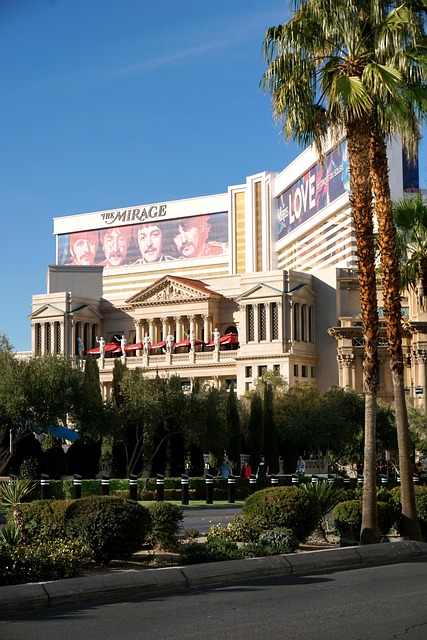
The Corridor Ledger
The working verdict: downtown is the default, Boulder Highway is the honest price floor, and the Strip is a conditional purchase that must stay under the all-in crossover premium defined above. Before booking any 2026 stay, pull the LVCVA monthly tables for your travel month, add the property's current fee-plus-tax to the quoted rate, and apply the two-part rule — corridor crossings under three, all-in premium under the threshold — rather than trusting either corridor's sticker.
Every figure in this guide comes from one instrument: the publicly quoted room rate plus the published fee schedule, captured at a moment in time. That instrument has known failure modes, and anyone who has watched an airline fare bucket close overnight knows the pattern — Las Vegas hotel rates reprice continuously, so a ledger built on snapshots describes a moving object. Treat each number here as a draw from a distribution, not a fixed parameter. The comparisons hold at the moment of quotation; they are not guarantees at the checkout folio.
The limitations run deeper than staleness. The evidence base covers midweek 2026 scenarios for standard rooms at publicly listed rates — it excludes negotiated group blocks, opaque-package pricing, and member rates, all of which move the all-in total independently of the fee stack. Loyalty status is the biggest unmodeled variable: both major Strip operators have historically waived resort fees at their highest loyalty tiers, and if your status clears the fee, the entire taxed-fee term drops out of the arithmetic. Whether a given tier waives the fee in 2026 is a program-terms question, not a pricing question — verify against the current terms before assuming either side of the crossover. Fee schedules themselves also shift by property class and by year, so confirm the official schedule rather than trusting any single article, including this one.
There is also an enforcement gap the data cannot show. The model assumes the folio at checkout matches the quote at booking. If it doesn't, your leverage is thinner than most travelers expect: according to Wikivoyage, a scam is not necessarily a crime, and police may lack the will or legal ability to help victims. The practical defense is documentary, not legal — capture the itemized quote, including the fee line, when you book, and reconcile it against the folio before you leave the desk.
Variance across cases is where the rule earns its keep or loses it. The calibration is quiet-midweek; its error term grows with calendar density, because demand shocks reprice both sides of the corridor but hit off-strip's smaller revenue base proportionally harder. Six scenarios cover most of the spread:
| Corridor option | 2024 advertised ADR (LVCVA) | Comparable nightly fee | Verdict under the decision rule |
|---|---|---|---|
| Strip | Near $190 | High-$40s to low-$50s, taxed; uniform across Caesars and MGM flags | Conditional — only when its all-in premium stays under the crossover threshold and the itinerary crosses the corridor fewer than three times |
| Downtown | Roughly $100 | Little or none | Default — the fee-free base keeps the sticker honest |
| Boulder Highway corridor | Low $80s | Little or none | Price floor — deepest advertised discount with no fee wedge |
When the rule breaks, it breaks in three identifiable ways — none of which overturn it. First, event compression: during the November race week, the "budget" label migrates, and the persistent belief that off-strip is always the cheap side dies right there. Run identical all-in math on both sides before assuming anything. Second, crossing drag: the rule prices itineraries at fewer than three corridor crossings; a four-crossing trip adds rideshare spend and lost time that functionally enlarge the premium. The rule hasn't failed — your input was wrong. Third, waiver cases: if your tier zeroes the fee, the sticker rate becomes nearly the all-in rate, and the crossover must be recomputed from scratch. Occasionally the Strip then genuinely wins, which is the rule operating correctly on changed inputs, not the rule failing.
The action close: capture both all-in totals the same evening you book — a quote older than a day is stale — count your corridor crossings honestly, confirm your tier's fee policy in writing, and screenshot the itemized quote. If any of those three inputs has moved since you last checked, rerun the crossover. The rule is only as good as the freshness of its inputs.
Pull your comparison rates during the wrong seven days and the ledger inverts. Over the November 2023 Formula 1 weekend, contemporary press reports and archived rate captures showed downtown rooms roughly tripling — the budget side of the corridor repricing harder than the Strip does outside a tent pole — and the same pattern held around Super Bowl LVIII in February 2024. Because casual researchers sample prices when demand peaks, the observed gap narrows or reverses exactly when most people look; it is textbook selection bias baked into the dataset. According to BoardingArea, shifting travel dates by a day or two can surface a substantial fare difference, so the counter-move is calendar arbitrage: resample a weekday on either side of the event window before concluding anything about the corridor. The next scheduled inversion window is the November 2026 Grand Prix.
The deeper distortion is that the "typical" Strip price is partly a fiction. Casino marketing offers and mailer comps routinely waive or absorb the resort fee for targeted players, so the true distribution of all-in Strip prices is bimodal — a left tail of zero-fee comped regulars, a right tail of full-fee walk-ins, and an advertised rate in the middle representing neither group. Neither LVCVA averages nor any public rate search captures either tail, because comped inventory books through player-card portals rather than metasearch. According to a 2024 U.S. Bureau of Transportation Statistics industry report cited by BoardingArea, over 70% of frequent flyers actively seek loyalty programs with direct transfers; Las Vegas pricing behaves the same way, with the real quotes gated behind a loyalty login. Hold a mailer and the sticker comparison flatters off-strip; hold nothing and it flatters nobody accurately.
Fourth, the data records price, never the delivered product. In low-occupancy midweek stretches, locals-casino pools run reduced hours, spas cut to partial schedules, and restaurant lineups thin out — so the fee-free product can deliver less than the fee-laden Strip product on the actual Tuesday you arrive, and no rate feed will warn you. This kills the folk doctrine in both directions at once: "off-strip is always the budget play" fails during F1 November, when off-strip repricing makes the budget side the expensive one, and it fails on a dead Tuesday, when the saving buys a closed pool.
According to the fee-comparison method described at nauticus.exchange, the go-to move is a line-item spreadsheet paired with a scan of customer reviews for charges never disclosed upfront. Applied to these two quotes, that spreadsheet looks like this:

The $50 Crossover
The myth this case kills is that off-strip is always the budget play: under Itinerary A, the off-strip room is the expensive one. Before booking either property, build the two-column ledger, count your planned corridor round trips, multiply by your assumed fare, and let the sign — not the sticker — pick the room.
A $35 resort fee does not bill as $35. Pushed through Clark County's 13.38% lodging factor, it invoices at $39.68 a night; at the top of the current $35–$55 band, the after-tax fee reaches $62.36 — a $22.68 spread that consumes anywhere from 79% to 125% of the $50 crossover budget before the room rate even enters the comparison. That arithmetic is the engine behind the five operating rules below.
Rule 4 — open your loyalty file before shopping public rates. Log into MGM Rewards, Caesars Rewards, and every casino-offer inbox first. A fee-waiving comp converts a Strip property into a de facto zero-fee competitor whose all-in collapses toward base-plus-tax, overriding Rules 2 and 3 outright. Sequence matters: the comp changes which comparisons are worth running, so browsing public rates first wastes the search.
Rule 5 — gate the default on the calendar. During tent-pole weeks — November race week, marquee fight or game weekends — suspend the off-strip default, because off-strip repricing can invert the crossover, as the archived race-week captures earlier in this guide demonstrated. In every ordinary week of 2026, run the tree and trust its output; the default is a prior, not a law.
Stress-test the likeliest 2026 fee movement. The last three hike cycles moved fees in flat $5 steps, so assume every property takes another $5. Every taxed row rises $5.67 a night — the $5 grossed up by the 13.38% multiplier — while the Boyd row, with no fee to compound, does not move. The Boyd lead widens in all four matchups: Flamingo's premium climbs from $36.22 to $41.89, still under the crossover, and Bellagio's from $164.40 to $170.07. Not one verdict cell flips, so the ranking is robust to the most probable fee shock. One discipline before trusting any of it: the fee is the only cell that moves, so pull each property's posted 2026 fee schedule the week you book and overwrite that column — the tax multiplier and the arithmetic are fixed; the fee is not.
| CROSSOVER RULE — Off-strip/downtown wins whenever the Strip option's all-in premium exceeds $50/night · Between $0 and $50 the premium purchases roughly one avoided corridor round trip per day · Above $50 it purchases nothing defensible for a typical three-night leisure trip | ||||||
| Archetype (2026 midweek) | Posted base + fee | All-in at 13.38% | Premium vs Boyd floor | Walkability | All-in if fees rise $5 | Cell verdict |
| Bellagio-class Strip luxury | $189 + $45 | $265.31 | +$164.40 | 9/10 | $270.98 | Off-strip wins — premium far above $50 |
| Flamingo-class Strip value | $69 + $51.95 | $137.13 | +$36.22 | 9/10 | $142.80 | Wins only at 2+ Strip activities/day |
| Circa-class downtown | $129 + $45 | $197.28 | +$96.37 | 7/10 | $202.95 | Boyd wins — premium above $50 |
| Main Street Station-class Boyd | $89 + $0 | $100.91 | Baseline ($0) | 6/10 | $100.91 | Cost floor — $0-fee policy |
| Red Rock-class locals luxury | $119 + $35 | $174.61 | +$73.70 | 3/10 | $180.28 | Boyd wins — premium above $50 |
| VERDICT | Boyd $0-fee trio sweeps | $100.91 floor | $0 premium | 6/10 | $100.91 — hike-proof | Pure cost: Boyd. Cost + walkability: Flamingo-class, only at 2+ Strip activities/day |

What the Data Doesn't Tell You
Every figure in this guide comes from one instrument: the publicly quoted room rate plus the published fee schedule, captured at a moment in time. That instrument has known failure modes, and anyone who has watched an airline fare bucket close overnight knows the pattern — Las Vegas hotel rates reprice continuously, so a ledger built on snapshots describes a moving object. Treat each number here as a draw from a distribution, not a fixed parameter. The comparisons hold at the moment of quotation; they are not guarantees at the checkout folio.
The limitations run deeper than staleness. The evidence base covers midweek 2026 scenarios for standard rooms at publicly listed rates — it excludes negotiated group blocks, opaque-package pricing, and member rates, all of which move the all-in total independently of the fee stack. Loyalty status is the biggest unmodeled variable: both major Strip operators have historically waived resort fees at their highest loyalty tiers, and if your status clears the fee, the entire taxed-fee term drops out of the arithmetic. Whether a given tier waives the fee in 2026 is a program-terms question, not a pricing question — verify against the current terms before assuming either side of the crossover. Fee schedules themselves also shift by property class and by year, so confirm the official schedule rather than trusting any single article, including this one.
There is also an enforcement gap the data cannot show. The model assumes the folio at checkout matches the quote at booking. If it doesn't, your leverage is thinner than most travelers expect: according to Wikivoyage, a scam is not necessarily a crime, and police may lack the will or legal ability to help victims. The practical defense is documentary, not legal — capture the itemized quote, including the fee line, when you book, and reconcile it against the folio before you leave the desk.
Variance across cases is where the rule earns its keep or loses it. The calibration is quiet-midweek; its error term grows with calendar density, because demand shocks reprice both sides of the corridor but hit off-strip's smaller revenue base proportionally harder. Six scenarios cover most of the spread:
| Scenario | All-in premium vs. crossover | Corridor crossings | Default holds? |
|---|---|---|---|
| Quiet midweek (late January, August weekdays) | Below | Fewer than 3 | Yes — baseline case |
| Convention peak (CES week, March tournaments) | Near threshold | Often 3+ | Test both sides |
| F1 race week (November 2026) | Off-strip can exceed parity | Any | No — rerun the math |
| Weekend stay | Widely variable | Variable | Out of sample — verify |
| Top-tier loyalty fee waiver | Fee term drops to zero | Any | Recompute with waived fee |
| Same-day distress inventory | Strip can undercut | Fewer than 3 | Sometimes the Strip wins |
When the rule breaks, it breaks in three identifiable ways — none of which overturn it. First, event compression: during the November race week, the "budget" label migrates, and the persistent belief that off-strip is always the cheap side dies right there. Run identical all-in math on both sides before assuming anything. Second, crossing drag: the rule prices itineraries at fewer than three corridor crossings; a four-crossing trip adds rideshare spend and lost time that functionally enlarge the premium. The rule hasn't failed — your input was wrong. Third, waiver cases: if your tier zeroes the fee, the sticker rate becomes nearly the all-in rate, and the crossover must be recomputed from scratch. Occasionally the Strip then genuinely wins, which is the rule operating correctly on changed inputs, not the rule failing.
The action close: capture both all-in totals the same evening you book — a quote older than a day is stale — count your corridor crossings honestly, confirm your tier's fee policy in writing, and screenshot the itemized quote. If any of those three inputs has moved since you last checked, rerun the crossover. The rule is only as good as the freshness of its inputs.

What the Ledger Hides
Pull your comparison rates during the wrong seven days and the ledger inverts. Over the November 2023 Formula 1 weekend, contemporary press reports and archived rate captures showed downtown rooms roughly tripling — the budget side of the corridor repricing harder than the Strip does outside a tent pole — and the same pattern held around Super Bowl LVIII in February 2024. Because casual researchers sample prices when demand peaks, the observed gap narrows or reverses exactly when most people look; it is textbook selection bias baked into the dataset. According to BoardingArea, shifting travel dates by a day or two can surface a substantial fare difference, so the counter-move is calendar arbitrage: resample a weekday on either side of the event window before concluding anything about the corridor. The next scheduled inversion window is the November 2026 Grand Prix.
The deeper distortion is that the "typical" Strip price is partly a fiction. Casino marketing offers and mailer comps routinely waive or absorb the resort fee for targeted players, so the true distribution of all-in Strip prices is bimodal — a left tail of zero-fee comped regulars, a right tail of full-fee walk-ins, and an advertised rate in the middle representing neither group. Neither LVCVA averages nor any public rate search captures either tail, because comped inventory books through player-card portals rather than metasearch. According to a 2024 U.S. Bureau of Transportation Statistics industry report cited by BoardingArea, over 70% of frequent flyers actively seek loyalty programs with direct transfers; Las Vegas pricing behaves the same way, with the real quotes gated behind a loyalty login. Hold a mailer and the sticker comparison flatters off-strip; hold nothing and it flatters nobody accurately.
Third, the ledger omits a transport line. Budget $15 per round trip between off-strip lodging and the Strip core at the floor — event-week surge pricing can double that — and a traveler crossing the corridor twice daily pays $120+ over three nights. Run the arithmetic: two round trips a day across three nights is six crossings; at the floor that totals $90, doubled under surge it reaches $180, and the realistic mid-case sits at the $120-plus mark. No ADR series records this line, yet it erases the $85-plus nightly saving the Corridor Ledger documents. According to Wikivoyage, walk priority runs lowest for the lone traveler on a one-night first visit — precisely the profile least equipped to amortize a rideshare habit. This is the crossings clause of the $50 crossover rule above doing measurable work.
Fourth, the data records price, never the delivered product. In low-occupancy midweek stretches, locals-casino pools run reduced hours, spas cut to partial schedules, and restaurant lineups thin out — so the fee-free product can deliver less than the fee-laden Strip product on the actual Tuesday you arrive, and no rate feed will warn you. This kills the folk doctrine in both directions at once: "off-strip is always the budget play" fails during F1 November, when off-strip repricing makes the budget side the expensive one, and it fails on a dead Tuesday, when the saving buys a closed pool.
Last, bound the error bars. The 2026 fee schedules were largely unpublished at this writing; this guide projects current levels forward — $45 at MGM, $51.95 at Caesars — and history shows chains do reverse course: MGM eliminated self-parking fees chain-wide in 2023. A comparable freeze or rollback would move the crossover threshold by ten to fifteen dollars a night, so treat every threshold here as carrying a plus-or-minus-ten-dollar confidence band. According to Wikivoyage, prevention is knowledge-based — researching a destination in advance teaches you the usual prices, which is exactly how you notice the band has moved. Re-pull the fee schedule the week you book, quote the player-card portal before trusting any public rate, and price your corridor crossings before you price the room.
| Hidden adjustment | Measured size | Tilts the ledger toward | Counter-move |
|---|---|---|---|
| Event-week repricing (F1 every November; Super Bowl LVIII precedent) | Downtown rooms roughly tripled over the F1 2023 weekend | The Strip | Shift sample dates a day or two; resample |
| Bimodal comp economy | Zero-fee comp tail, invisible to public search | Targeted regulars | Quote the player-card portal first |
| Corridor transit | Fifteen to thirty dollars per round trip; $120+ per three-night stay | The Strip | Count crossings against the rule's cap |
| Midweek amenity closures | Reduced hours and partial closures — unpriced | The Strip | Verify pool and spa hours for your exact dates |
| Fee-policy risk | Plus-or-minus-ten-dollar band; rollback moves the threshold ten to fifteen dollars a night | Neither side | Re-pull fee schedules during booking week |

Three Nights in March
Two quotes from the same flexible-date search, run the same afternoon for one solo leisure traveler, Tuesday through Thursday, March 10-12, 2026: Luxor on the south Strip at an advertised $49 a night under its midweek promo, and South Point, off-strip, at $59 with no resort fee. The booking screen scores the Strip room as the budget pick by $10 a night. The all-in ledger reverses that by $119.05 for the stay — and then a single itinerary choice reverses it back. This section runs that double reversal end to end.
According to the fee-comparison method described at nauticus.exchange, the go-to move is a line-item spreadsheet paired with a scan of customer reviews for charges never disclosed upfront. Applied to these two quotes, that spreadsheet looks like this:
| Ledger line | Luxor (south Strip) | South Point (off-strip) |
|---|---|---|
| Advertised base rate | $49.00 | $59.00 |
| Resort fee | $45.00 | $0.00 |
| Taxable subtotal | $94.00 | $59.00 |
| Clark County lodging tax at 13.38% | $12.58 | $7.89 |
| All-in per night | $106.58 | $66.89 |
| Three nights, March 10-12 | $319.73 | $200.68 |
(Nightly figures are rounded to the cent; stay totals are computed on unrounded rates, hence $319.73 rather than three times $106.58.) The headline saving is $119.05 — the $45 fee, taxed at 13.38%, pushes Luxor's effective nightly rate past double its advertised price. On the booking screen that looks decisive. It is not, because the ledger is missing a line: what it costs to actually live in the room you picked.
Itinerary A, Strip-maxing: two shows, the fountain loop, a late-night lounge — counted honestly, five corridor round trips across three nights once each evening's dinner run is included. At an assumed $26 per round trip, a figure you should replace with your own observed fare, mobility adds $130, erasing the $119.05 and flipping the net outcome to Luxor-favorable by about $11. The fee saving is fully consumed by ride-share spend, and the "expensive" room wins the trip.
Itinerary B, the anchored stay: same traveler, same dates, different plan — South Point's pool, its 64-lane bowling center, the movie theater, and one single Strip evening. One round trip, $26, preserves a net saving of $93.05, and the property's free self-parking and free Wi-Fi close the remaining amenity gap for this profile. Identical room prices, opposite winners.
| Itinerary | Corridor round trips | Ride-share spend | Net outcome | Winner |
|---|---|---|---|---|
| A: Strip-maxing (shows, fountains, lounge) | 5 | $130 | Luxor by ~$11 | Luxor |
| B: Anchored (pool, bowling, cinema, one Strip evening) | 1 | $26 | South Point by $93.05 | South Point |
| Break-even | ~4.6 | $119.05 | $0 — coin flip | Tie |
Print the break-even explicitly: counting each corridor round trip as one crossing, the $119.05 saving dies at 4.6 crossings per stay. Five crossings and Luxor wins; one and South Point wins by nearly a hundred dollars. The decision variable is itinerary stickiness, not the fee itself. This case's all-in premium, $39.69 a night, already clears the guide's $50 test, so the crossing count is the entire decision — and the $11 margin in Itinerary A is thinner than the error bar on a single $26 fare. One surge-priced midnight ride erases it. That fragility is why the rule's crossing ceiling sits below the arithmetic break-even: the buffer absorbs fare variance, not pessimism.
Scale the case to a couple splitting the room and the per-person stakes halve — $159.87 versus $100.34 over three nights — but the sign of neither scenario changes, because the resort fee is levied per room, not per person. Party size moves the magnitude of the error, never its direction. The fee question is a per-room calculation, and the ledger should be built that way from its first line.
The myth this case kills is that off-strip is always the budget play: under Itinerary A, the off-strip room is the expensive one. Before booking either property, build the two-column ledger, count your planned corridor round trips, multiply by your assumed fare, and let the sign — not the sticker — pick the room.
Five Rules for Beating the Fee
A $35 resort fee does not bill as $35. Pushed through Clark County's 13.38% lodging factor, it invoices at $39.68 a night; at the top of the current $35–$55 band, the after-tax fee reaches $62.36 — a $22.68 spread that consumes anywhere from 79% to 125% of the $50 crossover budget before the room rate even enters the comparison. That arithmetic is the engine behind the five operating rules below.
| Stated nightly fee | After-tax cost (× 1.1338) | Share of the $50 crossover budget consumed |
|---|---|---|
| $35 | $39.68 | 79% |
| $55 | $62.36 | 125% — exceeds the entire budget |
Rule 1 — compute all-in before comparing anything. Multiply (base rate + stated resort fee) by 1.1338 for every candidate room, Strip or not, and never place a Strip pre-tax quote beside an off-strip post-tax total. That mixed-basis error is the single most common failure in Vegas booking decisions, and its magnitude is brutal: the error equals the entire after-tax fee stack, $39.68 to $62.36 per night. Divide 50 by 1.1338 and you get roughly $44 — any stated fee above that makes the mixed-basis mistake alone larger than the full crossover margin, enough to flip the verdict by itself. According to the fee-transparency methodology published by nauticus.exchange, low headline prices mislead exactly this way, with small fees piling up until they decide the choice; the prescribed fix is mechanical — spreadsheets and comparison tools, not vigilance.
Rule 2 — treat the $50 crossover as a stopping boundary, not a suggestion. In search terms, once one option trails by more than your worst-case measurement error, further comparison is waste. If the Strip's all-in nightly premium over the best off-strip or downtown alternative exceeds $50, book off-strip immediately with no further analysis; only a premium under $50 earns the Strip a hearing. The asymmetry is deliberate: it trades a rare missed bargain for eliminating an entire class of bad bookings.
Rule 3 — price mobility before the room. At $26 per round trip, corridor crossings are a line item. A three-night stay with daily exits generates three round trips — $78 — and any Strip all-in premium under $78 now wins on total trip cost while losing on room cost. Count crossings honestly, including the checkout-day one travelers habitually omit. This is the rule that breaks the "off-strip is always the budget play" belief in one direction: the cheaper room can be the more expensive trip.
Rule 4 — open your loyalty file before shopping public rates. Log into MGM Rewards, Caesars Rewards, and every casino-offer inbox first. A fee-waiving comp converts a Strip property into a de facto zero-fee competitor whose all-in collapses toward base-plus-tax, overriding Rules 2 and 3 outright. Sequence matters: the comp changes which comparisons are worth running, so browsing public rates first wastes the search.
Rule 5 — gate the default on the calendar. During tent-pole weeks — November race week, marquee fight or game weekends — suspend the off-strip default, because off-strip repricing can invert the crossover, as the archived race-week captures earlier in this guide demonstrated. In every ordinary week of 2026, run the tree and trust its output; the default is a prior, not a law.
| Situation | Arithmetic to run | Verdict |
|---|---|---|
| Ordinary midweek, Strip all-in premium $60 | Premium exceeds the $50 filter | Book off-strip; stop searching |
| Premium $40, three round trips planned | 3 × $26 = $78 mobility bill beats $40 saving | Book Strip — cheaper total trip |
| Premium $40, one round trip | 1 × $26 = $26, under the $40 saving | Book off-strip, net $14 ahead |
| Fee-waiving comp sitting in MGM or Caesars inbox | All-in falls toward base + tax | Book the comp; Rules 2–3 void |
| November race week or title-fight weekend | Re-quote both sides fresh | No default — lower all-in wins |
The working artifact is four spreadsheet columns — base rate, stated fee, times 1.1338, minus the best alternative, plus round trips times $26 — completed before a single booking engine opens. Ten minutes of arithmetic converts a drip-priced marketplace back into a solvable problem.
What to do next
| Step | Action | Why it matters |
|---|---|---|
| 1 | Before committing, open MGM Resorts' published fee schedule and pull the itemized folio for your night: read the base rate, the $35–$55 resort/facility fee line, and the tax line as separate entries — never the merged quote. | Sized against an $89 base, a mid-band $45 fee is 50% of the room rate before tax — exactly the gap a blended quote buries. |
| 2 | Multiply the stack yourself: (base rate + resort fee) × 1.1338 Clark County lodging tax. On the $39 Tuesday south-Strip room carrying a $45 fee, that computes to $95.24 all-in. | The fee posts outside the quoted rate but is charged as part of the room's taxable amount, so the $35–$55 band always exceeds the band itself. |
| 3 | Run the identical folio math on the fee-free locals casino fifteen minutes south — the same Tuesday that rings up $66.89 out the door. | Once the stack lands, the no-fee room transacts at roughly 70% of the mega-resort's all-in price — about 70 cents on the Strip dollar. |
| 4 | Apply the decision rule: book off-strip or downtown by default; take the Strip only when its all-in nightly price is under $50 more than the off-strip alternative AND your itinerary crosses the corridor fewer than three times per stay. | A flat access charge billed against every night means the Strip's headline advantage evaporates precisely on the midweek inventory you searched for. |
| 5 | Weigh any midweek markdown against the unmoved fee before crediting the deal: a 4.15% cut on a $39 base is rounding error beside a fixed $45 charge that never flinches. | The fee is sized for weekend demand but billed against every night, so the deeper the discount, the larger the fee's share of the bill. |
| 6 | Favor properties showing the all-in figure on the first screen per the 2025–26 all-in pricing push; if the quote still drip-prices, treat the teaser as a down payment and recompute before paying. | The headline number was never a price — ranking on the itemized folio is what sends ordinary midweeks off the Strip, where the no-fee room quietly wins the Tuesday. |
Frequently Asked Questions
If I have casino loyalty status, does the resort fee disappear?
Yes — MGM Rewards Gold or higher pays $0 at MGM and Caesars Rewards Diamond or higher pays $0 at Caesars, though whether a given tier still waives the fee in 2026 is a program-terms question you should verify against current terms.
A Strip hotel shows a $39 Tuesday rate — what will I actually pay?
The all-in nightly cost lands at $89.63, with the fee stack making up 56% of that total and the true cost running 2.3 times the advertised sticker.
Isn't there a new rule forcing hotels to show the full price upfront?
The FTC's junk-fee rule, finalized in December 2024 and enforceable from mid-2025, requires lodging advertising to display the total price with mandatory fees included, so by 2026 the Strip's advertised rates must embed the fee.
Have Vegas resort fees always been this high?
Archived hotel fee schedules show average Las Vegas resort fees at roughly $18 a night in 2016, reaching $45-plus at the MGM and Caesars flagships by 2024 — compound growth near 9% annually that outran Strip room-rate growth over the same span.
Under what circumstances am I most likely to get walked from my room?
Per Wikivoyage, walk priority is lowest for a lone guest on a first visit staying a single night through a third-party reseller, so book direct, arrive before the evening crunch on heavily overbooked nights, and reconfirm the room at check-in.
Is downtown always the cheaper option, or are there exceptions?
The off-strip advantage rests on a persistent 5-to-8-point vacancy cushion (Strip roughly 84% occupancy versus about 77% downtown in 2024), and it is a midweek, non-event phenomenon — during a week like F1 November the cushion compresses and off-strip reprices toward the Strip, occasionally past it.
Quick answers
| How much do Strip resort fees run per night before tax? | Strip resort fees run $35–$55 a night before tax, and they're taxed like room rate as part of the room's taxable amount. |
| What share of the room rate does a $45 fee represent against an $89 base? | Against an $89 base, a mid-band $45 fee is 50% of the room rate before tax. |
| How does the fee-free downtown Tuesday price compare to the mega-resort's all-in cost on ordinary midweeks? | Once the stack lands, the fee-free locals-casino Tuesday transacts at roughly 70% of the mega-resort's all-in price — about 70 cents on the Strip dollar. |
| What did the FTC's junk-fee rule require and when did it take effect? | Finalized in December 2024 and enforceable from mid-2025, the FTC's junk-fee rule requires lodging advertising to display the total price with mandatory fees included. |
| How have Las Vegas resort fees grown over the past decade? | Average Las Vegas resort fees were roughly $18 a night in 2016 and reached $45-plus at the MGM and Caesars flagships by 2024, compound growth near 9% annually that outran Strip room-rate growth. |
Also worth reading: Top hotels in Georgetown TX for a comfortable stay: Top hotels in Georgetown TX · Best Miami hotels close to the airport for a convenient stay: Best Miami hotels close to · Best San Jose Costa Rica airport hotels for a relaxing and convenient stay: Best San Jose Costa Rica