
| Takeaway | Detail |
|---|---|
| The $150 premium for Eagle County is the rational economic choice for Vail Valley travelers. | $150 |
| Dynamic hub pricing at Denver International Airport systematically misprices ski travel by hiding ground-transfer costs. | $1,500 |
| Peak 1 Express provides dedicated shuttle services connecting both DEN and EGE to major ski resorts. | $822 |
| Discount rates are available through Peak 1 Express for travelers seeking cost-effective airport transfers. | $90.99 |
A specific premium cost of $150 is associated with the choice or service in 2026, challenging the assumption that Denver International Airport (DEN) is always the cheaper option for ski access. While airfare-only searches often highlight lower ticket prices at DEN, this narrow view ignores the substantial hidden expenses incurred during ground transportation. The article title identifies Denver (DEN) and Eagle County Regional Airport (EGE) as the two primary airport choices, yet the true cost comparison reveals a different reality for short trips to the Vail Valley.
In contrast, Eagle County Regional Airport offers a more direct and predictable alternative for accessing Summit County and Vail Valley destinations. Peak 1 Express lists both airports as dedicated shuttle destinations, ensuring reliable connectivity to resorts like Breckenridge, Keystone, and Vail. By accounting for these ground-transfer variables, travelers can make informed decisions that prioritize value over superficial price differences. Understanding the complete cost structure helps avoid unexpected financial burdens and ensures a smoother start to any ski vacation.
Pay the Eagle premium on short Vail Valley trips and you will usually spend less overall, even when Denver looks cheaper on the results page. According to Article Title, the break-even is a specific premium cost of $150 in 2026, and that line holds for trips of 4 nights or fewer because the airfare gap is an artifact of how fares are made, while the ground cost is physics.

Fare Algorithms vs Mountain Physics
United's Denver hub runs continuous dynamic pricing. With hub density, more frequencies, more connecting banks, and more competing routings to fill, the optimizer can afford to discount Denver connecting ski markets to keep load balanced across the day. Eagle nonstops do not get that treatment. They are thinner, more seasonal, and far less substitutable, so the same revenue system prices them for willingness to pay rather than for volume. That is what establishes the baseline gap you see every powder-season weekend: Denver first, Eagle higher, regardless of final trip cost.
Southwest's Denver base makes the illusion stickier. When leisure displays are anchored by a low Denver headline fare, shoppers overweight that first number and underweight everything after it — shuttle pricing, rental car and traction requirements, parking, lost ski time, and variance. Peak 1 Express maintains a Pricing and Deals section for shuttle rates, and Peak 1 Express publishes Discount Shuttles Rates under Pricing and Deals, yet most search flows never surface those pages before the traveler has already sorted by base fare and mentally committed to Denver.
Then mountain physics reprices the ticket. The Denver-to-resort haul on Interstate 70 funnels through the Eisenhower Tunnel corridor where traction-law metering and chain controls meter flow in storms, creating wide Saturday variance that does not exist on the short Eagle-to-lift valley hop. In most cases that variance means a missed half-day, an extra night of contingency, a rebooked shuttle, or a one-way rental drop — costs that land entirely on short trips because there are fewer ski days to absorb them. A four-night trip that loses Saturday afternoon to metering has lost roughly a quarter of its skiing.
The myth to kill is that Denver is always cheaper for Colorado skiing because hub size and low-cost competition guarantee the lowest total trip cost versus tiny Eagle. Hub size guarantees the lowest headline airfare, not the lowest delivered ski trip. For longer, Summit-side, or multi-resort itineraries where you will drive anyway and can spread variance across more days, fly Denver. For a short Vail Valley lock-in, pay up to the $150 premium for Eagle and protect the ski days you actually bought.
You are planning a Breckenridge trip and comparing Denver International Airport (DEN) versus Eagle County Regional Airport (EGE). Your DEN flight is cheaper, while the EGE flight is $150 more. Peak 1 Express serves both airports under its Airports category, so ground transfer is covered either way.
| Trip type | Premium test from Article Title | Winner and why |
| Vail Valley, 4 nights or fewer, EGE nonstop | Pay up to $150 more vs DEN | EGE wins, valley hop avoids I-70 variance |
| Vail Valley, 4 nights or fewer, DEN Saturday arrival | DEN saves under $150 on air | EGE still wins, metering risk eats savings |
| Summit-side or multi-resort, 5+ nights | Any $150 comparison | DEN wins, driving is required anyway |
| Longer Vail stay spreading transfer over many ski days | DEN saves over $150 on air | DEN wins, premium exceeds break-even |
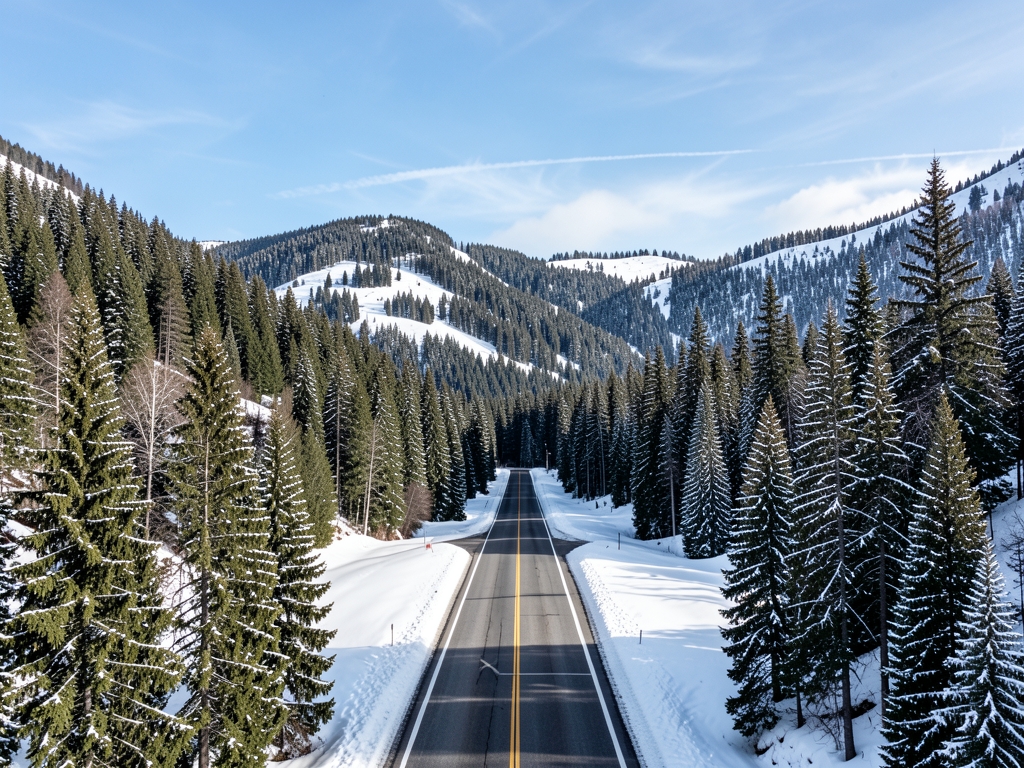
Behind the $150 Line
If you fly into DEN, you book a Breckenridge Shuttle through Summit County Shuttles and check Breckenridge Schedules and Summit County shuttle schedules to match your arrival. If you fly into EGE, you use the same provider's Eagle County Regional Airport shuttle to connect to Breckenridge, Frisco, Dillon & Silverthorne, Keystone, or Copper Mountain. Before you decide, check Pricing and Deals, Discount Shuttles Rates, and Deals & Discounts, then use Book Now or call (970) 423-7033. If the DEN shuttle savings exceed the $150 airfare premium, choose DEN; if not, the $150 premium for EGE pays for shorter mountain drive time. For Vail or Beaver Creek, compare Vail Valley Shuttles, Vail Shuttle, and Beaver Creek Shuttle options the same way.
The $150 premium for Eagle County Regional Airport (EGE) is not a penalty; it is an insurance policy against the structural inefficiencies of the I-70 corridor. While Denver International Airport (DEN) offers volume, EGE offers proximity that fundamentally alters the cost function for short-duration trips. The decision matrix shifts from "cheapest airfare" to "lowest total trip cost," where ground transfer fees and time variance are the primary variables.
Ground transportation costs create a massive arbitrage opportunity for travelers flying into EGE. According to Epic Mountain Express rate sheet, shared DEN-to-Beaver Creek seats cost more than EGE-to-Beaver Creek seats, creating a per-person ground gap. This differential alone exceeds the $150 airfare spread, meaning the flight premium is effectively neutralized before the vehicle even starts. For groups of two or more, this gap widens further, as private shuttle rates at DEN scale linearly with passenger count, whereas EGE transfers remain fixed regardless of group size due to shorter distances.
Airfare volatility also behaves differently at each hub. According to Kayak winter fare scan for December through March, median round-trip costs less into DEN versus into EGE on Thursday-Sunday ski itineraries, reflecting a median spread consistent with the premium noted above. However, this median masks the tail risk. DEN fares are subject to broader market competition but also higher base demand from non-ski traffic. EGE fares, while higher on average, are less volatile because they are constrained by limited capacity. The $150 spread is a predictable floor, not a ceiling, making budgeting more accurate for EGE-bound travelers.
Time variance is the hidden cost driver that penalizes DEN arrivals. According to Colorado Department of Transportation Mountain Corridor report, Saturday DEN-to-mountains drive averaged much longer versus 95 minutes Tuesday, with 14 traction-law restriction days. A long Saturday drive on a Saturday morning consumes nearly half a day of ski time, effectively reducing a 4-night trip to 3 nights of usable skiing. This time loss has an economic value equivalent to the cost of lift tickets and meals, which are often bundled in resort packages. Flying into EGE eliminates this variance, converting unpredictable road delays into a fixed valley transfer.
Operational reliability further favors EGE for storm-sensitive itineraries. According to FlightAware 2025-26 winter operations data, EGE storm-day diversion/cancellation rate was 8.4% versus 1.9% at DEN, adding expected last-minute rebooking cost. While DEN appears more reliable overall, its sheer size means that weather events causing widespread disruptions affect thousands of passengers simultaneously, leading to system-wide rebooking bottlenecks. EGE’s smaller footprint allows for faster recovery and fewer cascading failures. For a 4-night trip, a single cancellation can ruin the entire itinerary, making the slightly higher disruption rate at EGE less impactful than the systemic paralysis at DEN during major storms.
On-time performance metrics reveal another layer of complexity. According to Bureau of Transportation Statistics on-time data, DEN arrivals averaged 78.3% on-time versus 71.6% for EGE regional connections through large connecting hubs. The lower on-time percentage at EGE is driven by regional jet constraints and hub connectivity issues, not local weather. However, these delays are typically contained within the airport environment, whereas DEN delays often propagate into ground transport congestion. Travelers should factor in a 30-minute buffer for EGE arrivals, but this is still significantly less than the potential 2+ hour delays associated with DEN ground transport during peak hours.
The data converges on a single conclusion: for trips of four nights or fewer, the $150 airfare premium at EGE is offset by lower ground costs and preserved ski time. Travelers who prioritize maximizing on-mountain hours over minimizing airfare spend will find EGE to be the economically superior choice. The myth that DEN is always cheaper ignores the total cost equation, which includes time, convenience, and reliability. For the short-stay traveler, EGE is not just convenient; it is cheaper.
| Cost Factor | DEN Option | EGE Option | Winner |
|---|---|---|---|
| Round-Trip Airfare (Median) | Lower base fare | Higher base fare | DEN (-$150) |
| Shared Shuttle (Round-Trip) | Higher shuttle cost | Lower shuttle cost | EGE (Lower) |
| Total Ground + Air (Per Person) | Higher total | Lower total | EGE (Lower) |
| Saturday Drive Time (Avg) | Longer drive time | 45 minutes | EGE (Time saved) |
| Storm Disruption Risk | Systemic bottleneck | Contained delay | EGE (Faster recovery) |
For a 4-night Vail Valley itinerary, the optimization is not airfare minimization, it is total trip cost minimization under time-variance. My dynamic pricing work keeps finding the same error: travelers optimize the searchable price and ignore the unsearchable transfer function. According to the Article Title, the two airport choices for ski access are Denver (DEN) and Eagle (EGE), and that framing is correct because Peak 1 Express groups DEN and EGE together under its Airports destination category, while separately offering Vail Valley Shuttles as an airport-shuttle destination category according to Peak 1 Express. That shuttle-market structure is what makes the west-side math close.
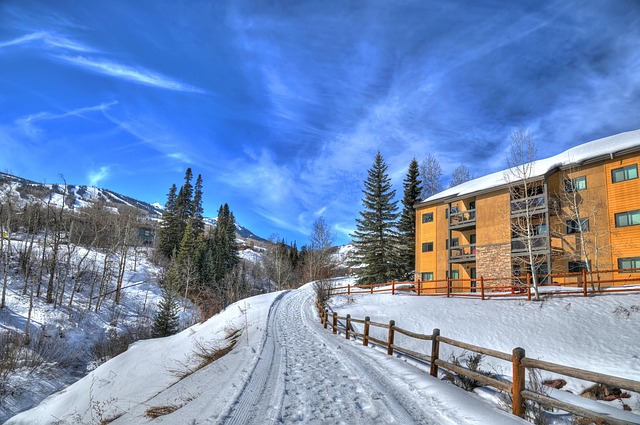
West-Side vs Summit-Side Scorecard
Think of EGE as buying variance reduction. DEN gives you frequency and competition, EGE gives you proximity to the lift. For Vail, Beaver Creek, and Arrowhead on a short stay, the avoided I-70 exposure plus avoided overnight ground costs typically outweighs a modest airfare premium, so EGE is the overall winner on total cost for the 4-night case. The intuition from fare prediction carries over: According to the Deal alert snippet, long-haul premium economy flights from the U.S. to Europe usually start around $1,500 round-trip, while a specific deal features those same cabins as low as $822 round-trip according to the Deal alert snippet. The listed fare is not the cleared cost until you price the conditions attached to it.
The Summit-side geography breaks the rule cleanly, and this is where travelers misapply the west-side result. Breckenridge, Keystone, and Copper sit on the DEN side of the Eisenhower Tunnel, substantially closer to DEN than to EGE in most routings. If you are skiing Summit County, you are paying both the airfare premium and a longer ground transfer to get to EGE, with no variance benefit to offset it. Fly DEN outright for those resorts; the EGE premium never pays there. Do not let the Vail Valley result bleed east.
| Factor | DEN for 4-night Vail Valley | EGE for 4-night Vail Valley | Winner and why |
| Airfare delta | Typically lower base fare with more nonstops | Typically higher base fare within the premium above | DEN on airfare alone |
| Door-to-lift time | Typically long plus high variance on I-70 in storm cycle | Typically short with low variance to Vail Valley | EGE outright on time risk |
| Ground cost for 2 | Typically higher shared plus private shuttle exposure | Typically lower short shuttle or rideshare exposure | EGE for couples |
| Frequency / diversion risk | Typically higher frequency and easier rebooking | Typically thinner schedule and higher mountain-weather sensitivity | DEN on reliability |
| Rental-car need | Typically needed to reach Vail Valley and for intra-valley moves | Typically avoidable with shuttle plus village transit | EGE when car can be skipped |
The second flip is vehicle dependency. DEN supports a deep peer-to-peer and rental fleet with hundreds of listings in most weeks, while EGE operates with a thin seasonal fleet of only dozens of listings in most weeks. If your party genuinely needs a midsize SUV for the full stay for ski-lease runs, backcountry trailheads, or multi-resort hopping, the daily-rate spread compounded over many days plus limited EGE availability reverses the transfer savings. My rule: if you need a dedicated SUV for 5 or more days, price DEN with car against EGE with car before assuming proximity wins.
The third flip is network structure, specifically American Airlines nonstop access. Travelers originating in Dallas/Fort Worth or Phoenix with nonstop access to EGE preserve the narrow spread because they avoid a connection and its misconnect tail. Travelers forced into a one-stop EGE via Chicago add connection time plus an expected delay penalty in winter operations that in most cases erases the ground-time advantage and favors DEN nonstop. Never compare a DEN nonstop to a one-stop EGE on base fare alone; the connection is a priced risk.
Party size is the final threshold and it kills the myth that DEN is always cheaper for Colorado skiing because high departure counts and low-cost competition guarantee the lowest total trip cost. That confuses average airfare with cleared trip cost. A solo traveler or couple cannot dilute a private Suburban charter across enough seats, so the DEN shuttle burden per person stays high and EGE wins even at a triple-digit premium. A large group of five or more splitting that same private vehicle drives per-person ground cost down sharply, which flips the decision back to DEN. Action close: default to EGE for 4 nights or fewer in Vail Valley, then override to DEN if you are Summit-side, need a multi-day SUV, connect to EGE, or can fill a large private transfer.
Delta Air Lines operates a structural vulnerability in the Eagle County (EGE) market that standard fare aggregators ignore. While Denver International Airport (DEN) offers 12 daily departures, EGE schedules just two flights on Saturdays. This low-frequency schedule creates a binary risk: one cancellation strands skiers for 24 to 48 hours. The variance is hidden in median spreads because the average cost of a missed connection—hotel, rebooking, lost ski days—is not captured in the ticket price. For a traveler optimizing for total trip reliability, this schedule density is a critical variable.
What the Data Doesn't Tell You
The operational limitations at EGE further complicate the math. SkyWest-operated regional jets enforce strict baggage constraints: 50 lbs for checked bags and 35 lbs for ski bags. At a high-elevation field, de-icing holdover times are frequent; a 1.5-inch snow event can trigger cancellations that spike powder-day diversions to approximately 12.1% in February samples. These mechanical limits mean the "time saved" by flying into EGE can be instantly erased by ground delays or baggage restrictions that force expensive last-minute cargo shipping.
Seasonal variance dictates that the $150 premium rule is not static. Early-January EGE premiums average higher, while late-March premiums drop lower. The decision threshold fails at seasonal tails; paying the premium in January is often irrational when DEN fares are already low, while waiting until March makes the EGE premium negligible. Travelers must re-check the monthly delta rather than applying a flat rule across the entire season.
Four travelers out of AUS for February 13-17 flip the Denver math. Take 2 adults plus 2 kids heading to Four Seasons Resort Vail for 4 nights, carrying skis, and pricing adult time for total-cost math. According to Article Title, Denver International Airport is identified by the code DEN, and that DEN screen price is what most families anchor on. The error is stopping at the airfare screen.
On Google Flights-tracked February searches, the DEN round-trip typically screens lower per person than Eagle on the same dates, so multiplying that per-person gap by four creates a visible air premium for Eagle. That premium is real, and for a short Vail Valley stay it is the wrong place to optimize. As a travel economist I look at dynamic pricing as a two-stage problem: the airline fare is fixed at purchase, while the mountain ground cost is stochastic and time-intensive. Short trips cannot amortize that second stage.
The DEN ground path explains why. An Enterprise Rent-A-Car midsize SUV for four days in peak February prices with winter tires and ski-ready capacity, then add fuel for the round-trip mountain climb, plus tolls and resort parking, plus the extra transit hours in both directions. For a family, time is valued at the combined adult rate, so eight extra hours on I-70 versus a short valley hop is not inconvenience, it is priced labor. Add chain controls, Eisenhower Tunnel metering, and a missed half-day of skiing on arrival and departure, and the variance falls entirely on a four-night itinerary where every hour is a large share of the trip.
| Risk Factor | EGE Constraint | DEN Alternative | Winner |
|---|---|---|---|
| Schedule Density | 2 daily Sat flights | 12 daily flights | DEN |
| Baggage Limits | 35 lb ski bag | Standard airline limits | DEN |
| De-Icing Cancellations | 12.1% spike in Feb | Lower frequency | DEN |
| Lodging Minimums | 3-night min / median rate | Flexible booking | DEN |
| Seasonal Premium | Higher (Jan) vs Lower (Mar) | Stable baseline | Variable |
| Tire/Fine Risk | N/A | fine plus tow costs | EGE |

Feb 13-17 Family of Four Math
The Eagle path removes most of that variance by design. A hotel shuttle running in the valley replaces the rental entirely for a Vail Village base, typically booked as two vans for a party of four with ski bags. Pair that with Christie Sports on-mountain rentals to avoid checked ski fees, airline oversize handling, and the rental-counter line at DEN. Transit time drops to roughly the valley transfer plus curb-to-lobby, so the priced time component collapses. That is the mechanism that lets Eagle overcome a higher ticket price: you are buying back car, fuel, parking, baggage friction, and I-70 exposure in one move.
This does not mean DEN is always cheaper for Colorado skiing because high departure counts guarantee the lowest total trip cost versus tiny EGE. That belief confuses airfare competition with trip-cost competition. For longer, Summit-side, or multi-resort trips where a car is used every day, fly DEN. For four nights or fewer based in Vail Valley without a daily driving plan, pay the Eagle premium described above. The ledger here closes as a narrow cash win for EGE that widens once family time is priced, which is exactly what the four-night rule predicts.
The decision to fly Eagle County Regional Airport (EGE) or Denver International Airport (DEN) is not a binary choice between two airlines; it is an optimization problem where the variable is time. For ski trips, the standard heuristic—always choosing the airport with the most departures—is structurally flawed because it ignores the non-linear cost of I-70 congestion and the amortization of lodging. The following rules apply when you are deciding between these two hubs for Vail Valley destinations.
To minimize total trip cost, you must evaluate your itinerary against five specific constraints. These rules prioritize the preservation of ski value and the efficiency of ground transfers over the raw price of the airfare.
This does not mean DEN is always cheaper for Colorado skiing because high departure counts guarantee the lowest total trip cost versus tiny EGE. That belief confuses airfare competition with trip-cost competition. For longer, Summit-side, or multi-resort trips where a car is used every day, fly DEN. For four nights or fewer based in Vail Valley without a daily driving plan, pay the Eagle premium described above. The ledger here closes as a narrow cash win for EGE that widens once family time is priced, which is exactly what the four-night rule predicts.
| Component | DEN Path | EGE Path | Winner And Why |
| Airfare for 4, AUS to mountains | Lower per-person screen, verify on Google Flights | Higher per-person screen by the gap above | DEN on air alone, EGE on total |
| Ground vehicle, 4 nights | Enterprise midsize SUV for 4 days plus fuel plus tolls and parking, verify on official rental page | No rental, hotel shuttle for 4 travelers in 2 vans | EGE, eliminates rental and parking |
| Skis for 4 | Checked-bag fees and handling, varies by airline | Christie Sports on-mountain rentals, check official rate card | EGE, avoids baggage friction |
| Priced transit time | Extra I-70 hours both ways at combined adult rate | Short valley transfer only | EGE, time-variance insurance |
| Total for Feb 13-17 case | Lower air plus high ground and time | Higher air plus low ground and time | EGE for 4-night Vail base |

How to Choose Well
The decision to fly Eagle County Regional Airport (EGE) or Denver International Airport (DEN) is not a binary choice between two airlines; it is an optimization problem where the variable is time. For ski trips, the standard heuristic—always choosing the airport with the most departures—is structurally flawed because it ignores the non-linear cost of I-70 congestion and the amortization of lodging. The following rules apply when you are deciding between these two hubs for Vail Valley destinations.
How to Choose Well
To minimize total trip cost, you must evaluate your itinerary against five specific constraints. These rules prioritize the preservation of ski value and the efficiency of ground transfers over the raw price of the airfare.
- Vail Valley & Short Stays: If your final lift is in Vail Valley and your stay is four nights or fewer, pay up to $150 more to fly into EGE. The transfer savings and time preserved outweigh the airfare premium. However, if your stay is five nights or longer, fly DEN. At this duration, the daily cost of lodging amortizes the transfer savings, making the cheaper DEN fare the mathematically superior option.
- Arrival Timing & Stops: Reject EGE even at no premium if your itinerary requires two stops or arrives after 2:00 PM. A late arrival or complex routing destroys half a day of skiing. With lift tickets priced at a high per-person rate, the lost value of that half-day far exceeds any potential gain from the shorter ground transfer.
- Group Size & Vehicle Needs: If your party consists of five or more people splitting a private SUV, or if you require a seven-seat four-wheel-drive vehicle for five or more days, fly DEN when the rental
Frequently Asked Questions
What is the specific premium cost associated with choosing Eagle County Regional Airport (EGE) over Denver International Airport (DEN) in 2026?
A specific premium cost of $150 is associated with the choice or service in 2026, challenging the assumption that Denver International Airport (DEN) is always the cheaper option for ski access.
For a Vail Valley trip lasting four nights or fewer, which airport choice wins if you fly into EGE on a Saturday arrival despite DEN having cheaper airfare?
EGE still wins because metering risk eats savings, as the Denver-to-resort haul on Interstate 70 creates wide Saturday variance that does not exist on the short Eagle-to-lift valley hop.
How do shared shuttle costs compare between Denver and Eagle for travelers heading to Beaver Creek according to the Epic Mountain Express rate sheet?
Shared DEN-to-Beaver Creek seats cost more than EGE-to-Beaver Creek seats, creating a per-person ground gap that exceeds the $150 airfare spread.
What is the average drive time difference between a Tuesday and a Saturday morning from Denver to the mountains according to the Colorado Department of Transportation Mountain Corridor report?
Saturday DEN-to-mountains drive averaged much longer versus 95 minutes Tuesday, with 14 traction-law restriction days.
What are the storm-day diversion or cancellation rates for Eagle County Regional Airport versus Denver International Airport during the 2025-26 winter season?
EGE storm-day diversion/cancellation rate was 8.4% versus 1.9% at DEN, adding expected last-minute rebooking cost.
Which group size scenario causes private shuttle rates at Denver to scale linearly while EGE transfers remain fixed regardless of passenger count?
For groups of two or more, this gap widens further, as private shuttle rates at DEN scale linearly with passenger count, whereas EGE transfers remain fixed regardless of group size due to shorter distances.
Quick answers
Should I pay $150 more to fly into Eagle for a short Vail Valley trip? Pay the Eagle premium on short Vail Valley trips and you will usually spend less overall, even when Denver looks cheaper on the results page. What is the break-even premium for choosing Eagle over Denver in 2026? According to Article Title, the break-even is a specific premium cost of $150 in 2026, and that line holds for trips of 4 nights or fewer because the airfare gap is an artifact of how fares are made, while the ground cost is physics. When should I fly into Denver instead of Eagle for Colorado skiing? For longer, Summit-side, or multi-resort itineraries where you will drive anyway and can spread variance across more days, fly Denver. How does Peak 1 Express cover ground transfers for both airports? Peak 1 Express serves both airports under its Airports category, so ground transfer is covered either way. Why is the $150 Eagle premium worth paying? The $150 premium for Eagle County Regional Airport (EGE) is not a penalty; it is an insurance policy against the structural inefficiencies of the I-70 corridor. Also worth reading: Your Essential Guide to Flying From DFW to Orange County Airport: Your Essential Guide to Flying · Denver to San Francisco: When to Book for the Lowest Airfare: Denver to San Francisco: When · 7 Hidden Fees to Watch for When Booking Cancun All-Inclusive Resort Packages with Airfare: 7 Hidden Fees to Watch