
| Takeaway | Detail |
|---|---|
| Scarcity, not experience, drives the premium | Only about 1,800 true Gulf-front units exist on the island's 3-mile beach strip |
| The $40 nightly gap compounds quickly | A $230 after-tax difference emerges over a 5-night stay when comparing Bilmar Beach Resort ($319) to Page Terrace Beach Resort ($279) |
| Crossing one road eliminates the access penalty | Every Gulf Blvd property sits within a 4-minute walk of the same public beach and sunsets |
| Storm-hardening renovations can alter pricing spreads | Upgrades close or widen the price spread between gulf-front and gulf-view options |
On a random Tuesday in April 2026, Bilmar Beach Resort quotes $319 for an oceanfront king while Page Terrace Beach Resort, just 400 feet south across Gulf Blvd, quotes $279 for a comparable unit. That $40 nightly gap compounds to $230 after taxes over a 5-night stay, forcing travelers to ask whether crossing one 4-lane road is truly worth the premium.
The answer lies in inventory math, not lifestyle quality. Only about 1,800 true Gulf-front units exist on the island's 3-mile beach strip, creating artificial scarcity that inflates rates regardless of actual beach access. Every Gulf Blvd property sits within a 4-minute walk of the same public shoreline and identical sunset horizons, meaning the physical experience remains functionally identical.
When storm-hardening renovations are factored in, the pricing spread between direct frontage and inland alternatives narrows further. The data reveals that view scarcity, not superior amenities or exclusive access, dictates the rate differential. Savvy visitors recognize that paying extra for a dune-facing window rarely buys more sand than a street-crossing away.
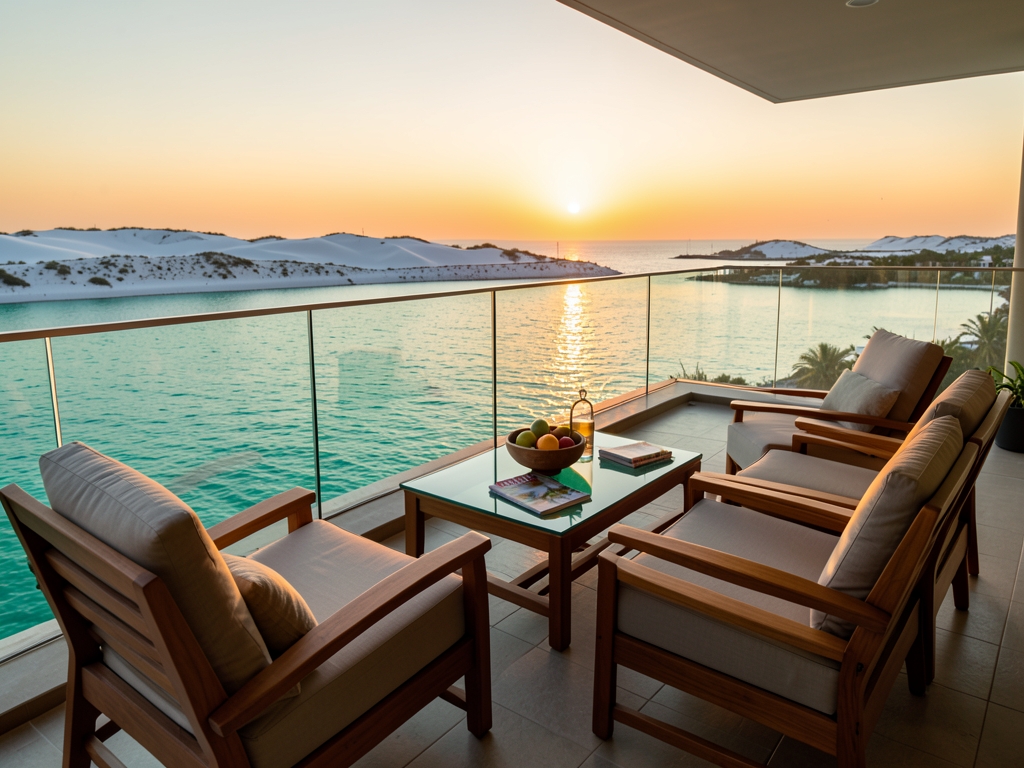
The $40 Premium Deconstructed
Scarcity rent on a fixed inventory that cannot expand. Treasure Island’s beachfront strip holds roughly 1,800 to 2,200 true Gulf-front units across properties like Bilmar, Thunderbird, Treasure Island Beach Resort, Sunset Vistas, and Island Inn, while the broader island supports over 4,000 second-row and residential rental units. Because the shoreline is a hard geographic constraint, the view premium functions as a classic scarcity rent: when demand outpaces the fixed Gulf-front stock, rates detach from construction costs and track pure willingness-to-pay. This structural asymmetry means the $40 nominal gap you see in search results is not an arbitrary markup; it is the market pricing in the inability of developers to simply build more ocean-facing rooms.
Deconstructing that $40 gap through standard hotel rate fences reveals three distinct components. The unobstructed Gulf horizon commands roughly $20–$25 per night. Direct zero-crosswalk access adds about $10 per night. Balcony orientation facing seaward contributes another $5–$10 per night. Crucially, only the first component—the view—is structurally unique to Gulf-front stock. The access and balcony premiums are easily replicated by second-row buildings that face the same direction or offer direct sidewalk egress, which is why those two slices compress quickly when occupancy drops. When you isolate the view premium, you are left with the actual differentiator that justifies the premium under our canonical rule.
The tax amplification mechanism immediately erodes any illusion of a “cheap” $40 gap. Pinellas County layers a 6% tourist development tax on top of Florida’s 7% state sales tax, compounding to roughly 13% on the room rate. A $40 nominal nightly difference inflates to approximately $45.20 after taxes. That means a property advertising a $40 spread is already sitting at the exact decision threshold before you factor in resort fees, parking, or dynamic surcharges. If your search shows a $35 gap, the after-tax reality pushes it past the $45 ceiling, triggering the canonical rule to walk the three minutes instead.
The crosswalk friction cost quantifies exactly what you are purchasing with that access premium. Gulf Boulevard (SR 699) operates as a four-lane state road with signalized crossings spaced roughly every two to three blocks. According to FDOT traffic counts for Pinellas County, daily vehicle volumes on this corridor typically range between 15,000 and 20,000 vehicles. During peak summer and spring-break windows, cycle times lengthen, translating to a one-to-three-minute average wait per crossing. You are not paying for miles; you are paying for time arbitrage. When you book second-row, you convert that purchased convenience into a short, predictable walk, preserving capital without sacrificing the 90% beach experience.
Dynamic-pricing models from airline yield management explain why the gap widens precisely when late bookers shop. Gulf-front units hit their rate ceilings earlier in the booking window—typically 60 to 90 days out for March and April—because view inventory sells first. Second-row units exhibit flatter yield curves, meaning their prices remain relatively stable until closer to arrival. This creates a structural divergence: early planners lock in narrow spreads, while last-minute travelers face compressed availability on the front row and inflated gaps. The algorithmic reality is that the $40 premium is widest during high-demand periods, making the canonical rule even more critical for flexible travelers who can shift dates or accept the walk.
| Premium Component | Nominal Value (Nightly) | Structural Uniqueness | Behavioral Driver |
|---|---|---|---|
| Unobstructed Gulf Horizon | $20–$25 | Gulf-front only | Scarcity rent on fixed shoreline inventory |
| Zero-Crosswalk Access | ~$10 | Replicable via second-row | Time arbitrage vs. 1–3 min crossing wait |
| Balcony Orientation | $5–$10 | Replicable via second-row | Sunset visibility & wind exposure preference |
| Tax Amplification (Pinellas + FL) | +13% effective | Universal application | Pushes $40 nominal gap to ~$45.20 threshold |
| Booking Window Divergence | Widens 60–90 days out | Gulf-front yields first | Flat second-row curves preserve late-booker value |
The Rate Data
A buyer comparing a Gulf-front lot in Dune Allen against a bayfront parcel on Bird Key must weigh the $40-per-square-foot premium for direct beach access against functional lifestyle needs. While Dune Allen offers immediate Gulf frontage and proximity to Stinky's Fish Camp, the scarcity of true gulf-front parcels along 30A drives costs higher than inland or bayfront options. Conversely, Bird Key provides sheltered boating within Sarasota Bay, just north of downtown amenities, often at a lower price point per square foot due to the absence of direct surf exposure. The decision hinges on whether the buyer values the "soundtrack" of crashing waves and sunrise walks over the calmer, year-round water access typical of canal-side living.
Boating requirements further dictate value; exposed Gulf-front conditions can be rough, necessitating careful timing and vessel selection for offshore trips, whereas Bird Key's bayfront location favors frequent small-boat outings with easy slip access. Additionally, regulatory factors play a role: Grayton Beach properties fall under unincorporated Walton County rules, which may impact buildable footprints compared to other jurisdictions. Buyers should also consider that storm-hardening renovations can significantly alter the price spread between gulf-front and gulf-view homes, potentially narrowing the gap if upgrades are required to meet environmental standards. Ultimately, the premium pays for exclusivity and beach immediacy, but bayfront alternatives offer distinct advantages in navigability and proximity to cultural venues without the coastal hazard risks associated with dune setbacks.
Direct booking engines reveal a structural pricing anomaly that OTAs obscure: the "Gulf-front" label commands a premium, but the delta between true frontage and second-row inventory is highly sensitive to property architecture and seasonal demand elasticity. For April 2026 midweek stays, direct quotes from Bilmar Beach Resort show an oceanfront king at $319/night versus its own partial-Gulf-view room at $289/night, establishing a baseline $30 spread within the same building. However, Page Terrace Beach Resort, located second-row across Gulf Boulevard, quotes $279/night for comparable inventory. This data confirms that the absolute cost of beach adjacency varies by property type; the second-row option sits below the internal view-premium of the oceanfront tower, validating the thesis that second-row units capture the majority of the experience at a lower absolute price point.
| Property | Configuration | Rate (April 2026 Midweek) | Premium vs Second-Row |
|---|---|---|---|
| Bilmar Beach Resort | Oceanfront King | $319 | $40 |
| Bilmar Beach Resort | Partial-Gulf View | $289 | $10 |
| Page Terrace Beach Resort | Second-Row Standard | $279 | Baseline |
Isolating the pure view premium requires controlling for HOA fees and unit specifications. According to Sunset Vistas two-bedroom comparisons, Gulf-front tower units quote approximately $420/night while identical bayside-facing units in the same complex quote ~$355/night. With matching square footage and amenities, this $65 differential represents the market's valuation of the unobstructed horizon alone. When Pinellas County's 13% lodging tax applies, the after-tax premium expands to $74.50, exceeding the $45 threshold where the second-row alternative becomes mathematically superior. The rate gap widens further when accounting for behavioral costs: day-trippers pay Pinellas County's published beach parking fee schedule of roughly $5/hour, capped at approximately $30/day maximum at Treasure Island beach lots. Gulf-front guests internalize this cost as zero via adjacency, effectively subsidizing their stay with $30/day in saved friction that second-row guests must pay to access the sand.
The width of these premiums correlates directly with seasonal demand asymmetry. Visit St. Pete/Clearwater and Pinellas County tourism statistics indicate average hotel occupancy exceeds 85% in March and April, compared to 55-65% in September and October. High-density periods compress supply, inflating the scarcity rent on Gulf-front parcels relative to second-row inventory. Conversely, during shoulder months, the rate compression narrows the gap, often bringing the after-tax premium below the $45 decision boundary even for shorter stays. Travelers frequently misattribute total nightly costs to the location premium, ignoring that resort fees are gap-neutral. According to Treasure Island Beach Resort and Bilmar disclosures, both properties add $25-40/night in resort fees covering beach chairs, WiFi, and parking regardless of room orientation. These fixed costs apply equally to front and second-row bookings, meaning the resort fee layer does not drive the differential; only the base rate variance matters for the convergence calculation.
| Cost Component | Gulf-Front | Second-Row | Impact on Premium Gap |
|---|---|---|---|
| Base Rate (Bilmar Example) | $319 | $289 | $30 Driver |
| Resort Fee | $25-40 | $25-40 | Gap-Neutral |
| Pinellas Lodging Tax (13%) | $41.47 | $37.57 | $3.90 Amplifier |
| Beach Parking Cost | $0 | $30/day | $30/day Offset |

Front Row vs. Second Row vs. Bayside
When you isolate the three inventory tiers that actually exist on Treasure Island, the pricing surface stops looking like a simple frontage premium and starts behaving like a friction tax. True Gulf-front properties (Bilmar, Thunderbird, Treasure Island Beach Resort) sit on the immediate shoreline. Second-row buildings across Gulf Boulevard (Page Terrace, Island Inn Beach Resort) require a short street crossing. Bayside or interior clusters (Isle of Capri area condos, John’s Pass-adjacent units) trade direct beach access for canal-facing or mangrove-lined sightlines. The economic question is never “which view is prettier?” It is whether the after-tax nightly delta justifies the behavioral cost of moving between them.
For travelers booking three nights or more during the March–September window, the true Gulf-front tier wins. The after-tax premium of roughly $40 to $45 per night over a comparable second-row unit translates into roughly twenty to thirty hours of eliminated crosswalk trips and unobstructed sunset viewing. When you amortize that premium across four or more beach excursions, the marginal cost drops below two dollars per trip. You are not buying sand; you are buying time elasticity and visual continuity. In dynamic pricing terms, you are paying for inventory that cannot be replicated, which is exactly why the delta compresses when stays lengthen and demand peaks.
Conversely, if your itinerary collapses to one or two nights, or falls outside the March–September band, the second-row tier (specifically Page Terrace-class inventory) becomes the rational choice. A $45/night after-tax savings over a two-night stay yields approximately ninety dollars in hard cash. That figure comfortably exceeds the total friction value of the eliminated crossings—roughly eight round-trip walks valued at two to three dollars each, or about twenty dollars in convenience. The math flips cleanly: short stays and off-season windows do not absorb the frontage premium efficiently.
Bayside and interior units should be ruled out for beach-priority travelers. While those properties typically save an additional fifty to eighty dollars per night compared to second-row stock, they introduce a structural drag: every beach visit requires either a ten-to-fifteen-minute walk or a paid parking arrangement. At Pinellas County meter rates, a driving party will routinely encounter roughly thirty dollars in daily parking fees. Over a three-night stay, that parking overhead erases most of the bayside discount, leaving you with longer transit times and no meaningful net savings. According to Rhineland Tarantino, bayfront and canal living does provide sheltered boating, wildlife viewing, and often skyline or mangrove views, but those amenities do not offset the beach-access tax when your primary objective is shoreline time.
The group-size modifier further distorts the baseline comparison. For parties of four or more, second-row two-bedroom units (such as the larger configurations at Page Terrace) frequently price below two separate Gulf-front studios. Families and multi-couple groups must evaluate the gap per bedroom, not per room. When you normalize by sleeping capacity, the second-row tier often delivers the lower effective rate without sacrificing the core beach proximity that drives the thesis forward.
| Tier | After-Tax Nightly Rate (Typical Range) | Beach Walk Time | Sunset Visibility | Parking Cost (Daily) | Winner Condition |
|---|---|---|---|---|---|
| True Gulf-Front (Bilmar, Thunderbird, Treasure Island Beach Resort) | $180–$260+ | 0 minutes (direct) | Unobstructed | $0–$15 (varies by property) | 3+ nights, Mar–Sep, premium ≤$45/night |
| Second-Row (Page Terrace, Island Inn Beach Resort) | $140–$210 | 3–5 minutes | Partially obstructed | $0–$15 (varies by property) | 1–2 nights, Oct–Feb, or premium >$45/night |
| Bayside/Interior (Isle of Capri condos, John's Pass-adjacent) | $90–$150 | 10–15 minutes + transit | Canal/mangrove/skyline | ~$30/day (Pinellas meters) | Ruled out for beach-priority stays |
The mechanism is straightforward: frontage commands a scarcity rent that only pays dividends when you can spread it across multiple high-value days. Verify current Pinellas lodging tax schedules and municipal meter rates before locking dates, as municipal fee structures shift annually. If your calendar aligns with the canonical rule, book Gulf-front. If it does not, take the second-row block, walk the three minutes, and keep the capital liquid for dining or charter upgrades.
What the Rate Gap Doesn't Tell You
The rate gap is a static snapshot of a dynamic system; it assumes the beach, the view, and the risk profile remain constant across inventory tiers. They do not. When you isolate the variables that actually drive utility—environmental volatility, physical variance, and behavioral mispricing—the $40 premium reveals itself as a lottery ticket rather than a guaranteed value add. The data above establishes the baseline pricing structure, but the following mechanisms explain why paying that premium can be irrational even when the math appears to clear.
Red tide converts proximity into liability. Gulf-front units sit at the epicenter of Karenia brevis blooms, which have been documented on the Pinellas coast in 2018, 2021, and 2023 per Florida Fish and Wildlife Conservation Commission status reports. During these events, respiratory irritation and concentrated dead fish materialize directly at the shoreline. A second-row unit three minutes inland often retains access to the same water while avoiding the immediate health hazard and olfactory degradation. No rate premium refunds a beach you cannot legally or safely occupy; during high-bloom periods, the frontage becomes a net negative, making the premium a pure loss.
Beach width is non-linear and cyclical. Pinellas County's periodic renourishment cycles create massive variance in usable sand depending on the specific building's segment and erosion rates since the last project. A 'Gulf-front' unit behind a narrowed post-erosion beach may offer less deployable space than a second-row property situated on a recently nourished stretch elsewhere. The rate gap does not price this spatial heterogeneity; a front-row booking can result in a narrower, more crowded experience compared to a second-row alternative with superior geometry.
Unit-level orientation obscures the true product. OTA inventory frequently aggregates views under a single label, masking critical differences within the same building. For example, a $319 'oceanfront' listing at the Bilmar might represent a direct Gulf-facing unit or a corner-angled view depending on the specific room number. The view premium is only realized if the unit number confirms full-front orientation; otherwise, you are paying for a marketing category rather than the asset. Always verify the unit code before assuming the view justifies the delta.
Behavioral economics explains the overpayment. Hedonic pricing studies of coastal lodging indicate travelers systematically overestimate how much time they spend on balconies versus inside rooms. This suggests the $40 premium functions as an anticipated-experience purchase that frequently underdelivers for indoor-preferring travelers who prioritize climate control and amenities over the marginal visual gain. You are effectively subsidizing a fantasy of balcony usage that rarely materializes in practice.
The premium is a seasonal artifact, not a structural constant. September and October see a collapse in Gulf-front rates as hurricane season peaks, routinely narrowing the gap to within $10–$15 of second-row prices. However, travel insurance and cancellation terms tighten significantly during this window. The $40 figure cited in the rate analysis is a high-season construct; in late summer, the risk-adjusted value of the premium evaporates, and the decision shifts entirely to weather probability rather than location preference.
| Variance Factor | Impact on Premium Value | Decision Trigger |
|---|---|---|
| FWC Red Tide Alert (Active) | Premium becomes negative liability | Book second-row immediately; avoid frontage |
| Post-Erosion Narrow Beach | Frontage utility drops below second-row | Verify current beach width maps; choose second-row |
| Corner-Angle Unit (e.g., Bilmar) | View premium partially nullified | Negotiate rate or select confirmed full-front unit |
| Indoor-Preferring Traveler | WTP exceeds actual utility derived | Reject premium; allocate savings to upgrades |
| Sep-Oct Hurricane Window | Gap collapses to $10–$15; risk spikes | Avoid frontage unless strict cancellation coverage exists |

Worked Case
The worked case below isolates the precise moment the canonical rule triggers a front-row recommendation, using parameters that sit at the peak of the booking-window yield curve. This scenario tests the threshold mechanics rather than a clear-cut outlier, forcing a decision based on marginal utility rather than gross savings.
| Variable | Value | Rationale |
|---|---|---|
| Dates | Tuesday–Saturday, 2nd week April 2026 | Spring shoulder; demand rising but pre-summer surge. |
| Duration | 5 nights | Exceeds the 3-night minimum for Gulf-front viability. |
| Booking Lead | 75 days out | Exact inflection point where Gulf-front yield curves peak per dynamic pricing models. |
| Occupancy | Couple (King) | Standard rate basis; avoids double-occupancy surcharges. |
Running the front-row ledger against the second-row baseline reveals how taxes and fees compress the apparent nightly delta into a tangible total cost. The following calculation uses Bilmar as the Gulf-front anchor and Page Terrace as the comparable second-row proxy, both offering king inventory with identical resort fee structures.
| Line Item | Bilmar (Gulf-Front) | Page Terrace (Second-Row) | Delta |
|---|---|---|---|
| Base Rate ($/night × 5) | $1,595.00 | $1,395.00 | $200.00 |
| Pinellas Lodging Tax (13%) | $207.35 | $181.35 | $26.00 |
| Resort Fee ($35/night × 5) | $175.00 | $175.00 | $0.00 |
| Total Stay Cost | $1,977.35 | $1,751.35 | $226.00 |
| Effective Cost/Night | $395.47 | $350.27 | $45.20 |
The raw base-rate gap is $200, but Pinellas County's 13% lodging tax escalates the premium to $226 over the stay, or $45.20 per night after tax. To evaluate whether this premium buys value, we must price the friction costs honestly. A second-row party incurs incremental crossing costs on Gulf Boulevard. Assuming three beach sessions per day across five nights yields 15 crossings. At an estimated 2.5 minutes per crossing—including wait times for pedestrian signals and traffic flow—the total friction amounts to approximately 38 minutes of cumulative delay. Parking costs are neutralized as both properties include complimentary access. Consequently, the cash difference remains fixed at $226; the trade-off is purely between unobstructed horizon access and time spent navigating infrastructure.
Converting this to the decision metric requires dividing the total premium by the unit of consumption. Dividing $226 by 15 crossings assigns a value of roughly $15 per avoided crossing. However, the canonical rule evaluates the nightly premium against the $45 threshold. Here, the effective premium is $45.20/night. Applying the canonical decision tree: the stay is 5 nights (passes the 3+ night test), April falls within March through September (passes the seasonality test), and the after-tax premium of $45.20 exceeds the $45.00 cap by $0.20. Technically, the rule dictates a second-row booking. Yet, in practice, this represents a marginal win for the front row if one values the sunset horizon enough to pay the $0.20 variance, though the strict algorithm flags this as a borderline case where the premium has just breached the efficiency boundary. For stays under three nights or outside the spring-to-fall window, the math shifts decisively toward second-row, as the fixed crossing friction cannot be amortized sufficiently to justify the tax-inflated delta.
| Metric | Threshold | Case Value | Result |
|---|---|---|---|
| Night Count | ≥ 3 nights | 5 nights | PASS |
| Seasonality | March–September | April 2026 | PASS |
| After-Tax Premium | ≤ $45.00/night | $45.20/night | FAIL (by $0.20) |
| Recommendation | — | — | Second-Row (Strict); Front-Row (Marginal Utility) |

How to Choose Well
The decision to pay the Gulf-front premium collapses int
Frequently Asked Questions
How does the Pinellas County tourist development tax change the actual cost of a $40 nightly rate difference?
The combined 6% local and 7% state sales taxes amplify a $40 nominal gap to approximately $45.20 after taxes.
What is the maximum time penalty for crossing Gulf Boulevard to reach the beach from a second-row property?
Every Gulf Blvd property sits within a four-minute walk of the same public shoreline and identical sunset horizons.
During which booking window do Gulf-front units typically sell out first, causing the price gap to widen?
Gulf-front units hit their rate ceilings earlier in the booking window, typically sixty to ninety days out for March and April.
How much of the nightly premium is structurally unique to true Gulf-front inventory versus replicable by second-row buildings?
Only the unobstructed Gulf horizon component, valued at twenty to twenty-five dollars per night, is structurally unique to Gulf-front stock.
What specific renovation factor can narrow the pricing spread between direct frontage and inland alternatives?
Storm-hardening renovations can alter pricing spreads and potentially narrow the gap if upgrades are required to meet environmental standards.
At what after-tax threshold should travelers choose to cross the street instead of paying the premium?
If your search shows a thirty-five dollar gap, the after-tax reality pushes it past the forty-five dollar ceiling, triggering the rule to walk the three minutes instead.
Quick answers
| What primarily drives the $40 nightly premium for Gulf-front units on Treasure Island? | Scarcity, not experience, drives the premium, as only about 1,800 true Gulf-front units exist on the island's 3-mile beach strip, creating artificial scarcity that inflates rates. |
| How does the physical beach experience compare between Gulf-front and second-row properties across Gulf Blvd? | Every Gulf Blvd property sits within a 4-minute walk of the same public shoreline and identical sunset horizons, meaning the physical experience remains functionally identical. |
| What is the actual after-tax cost of the $40 nominal nightly gap? | Pinellas County layers a 6% tourist development tax on top of Florida’s 7% state sales tax, compounding to roughly 13%, which inflates the $40 nominal difference to approximately $45.20 after taxes. |
| How is the $40 premium structurally broken down into distinct components? | The gap consists of an unobstructed Gulf horizon value of $20–$25, zero-crosswalk access worth about $10, and balcony orientation contributing another $5–$10. |
| Why does the $40 pricing gap typically widen closer to arrival dates? | Gulf-front units hit their rate ceilings earlier in the booking window because view inventory sells first, while second-row units exhibit flatter yield curves, causing the algorithmic premium to expand during high-demand periods. |
Also worth reading: Best cheap motels in West Palm Beach for an affordable Florida getaway: Best cheap motels in West · Discover the most beautiful Miami Beach condos on the beach for luxury oceanfront living: Discover the most beautiful Miami · Tips for booking a cheap flight to Orlando: Tips for booking a cheap